

一座从药剂配方里长出来的花园
威斯巴登的这片药用植物园,起念于 1982 年 10 月。提出这个想法的是 Rita de la Chevallerie 女士,市政绿化部门接下这个念头,转头找上本地的药剂师协会,协会当即表示赞成。1983 年 5 月拿出总体模型,同年 9 月有了整座园子的详图,1984 年 4 月动工,1986 年 6 月第一期建成开放,当时种着 85 种植物。建园费用约十七万欧元,市政以绿化和市政工程部门员工及学徒的劳务出份,药剂师协会出资金,市里再给补助,三方各担三分之一。
药草园这个行当的来路
种药草给人治病,是很老的手艺。埃及人、阿兹特克人、波斯人和中国人很早就懂得栽培、观察并记述药用植物,把材料备在手边。文字出现之后,这些做法被写进药草书和配方书,罗马的加图在公元前二世纪就记下了自己栽培的草本。1240 年,本地的药剂师这一行当从医生那里分出来,自立门户,此后由药剂师一档一档接着往下记、往下配。种植药用植物的地方也从修道院药圃,转到由药剂师打理、专为研究这些草木而设的药用园子。
五千五百平方米里的二百七十种药用植物
今天的园子有五千五百平方米,栽种着二百七十来种药用植物,按用途分区。园方自己更愿意用「药用植物」这个词,而不是「药草」——草本只是形态,药用植物还包括树木和灌木;至于疗效,很多种植物不过是起些缓解作用,说成能治病并不准确。除了正经的药用种,园里也留了一些纯观赏的植物和能提供天然染料的物种。
几个特别的种植区
园子按主题分成若干块,其中几处专门照着某个方向布置:顺势疗法的种植区、人智学的种植区、仿照修道院药圃的园区,以及以瓦拉弗里德·斯特拉博和希尔德加德·冯·宾根命名的两个园区。后两位都是中世纪写植物与药方的人,一位是修士,著有药草集;一位是女修道院院长,写过博物与疗法两部书,药用植物的种植传统在他们之后才慢慢成形。
志愿者、导览和一本手册
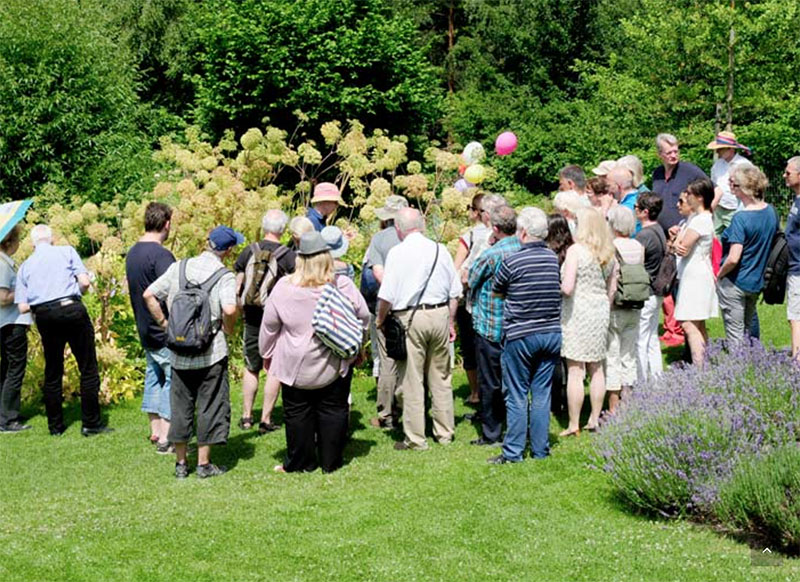
花园由威斯巴登的朋友圈协会和黑森-拿骚药剂师利益共同体一起托着,绿化部门出人力,药剂师组织出专业支持,大量事务靠志愿者。导览从五月底排到九月底,几乎每个周末都有,周六下午三点或周日上午十一点一场,志愿者领着走,不收费,每场换一个主题。园方还印了一本手册,第六版已经改到一百二十来页,介绍园里的药用植物和它们的用途,在导览现场和当地书店都有售。
A Garden That Grew Out of the Pharmacy
The idea for this medicinal plant garden in Wiesbaden dates back to October 1982. Rita de la Chevallerie came up with it, the city’s parks department took it on and approached the local pharmacists’ association, which agreed straight away. A master plan followed in May 1983 and a detailed plan for the whole site in September of the same year. Construction began in April 1984, and the first section opened in June 1986 with 85 plant species. Building it cost roughly 170,000 euros, paid in thirds: the city contributed labour through its parks and civil engineering departments and their trainees, the pharmacists’ association put up money, and the city added a subsidy on top.
How the Apothecary’s Garden Came About
Growing herbs for medicine is an old craft. Egyptians, Aztecs, Persians and Chinese knew very early how to grow medicinal plants, watch them closely and set down what they observed, so that the material they needed was always to hand. Once writing came along, that knowledge was recorded in herb and prescription books; the Roman Cato described herbs he grew himself around 200 BC. In 1240 the apothecary’s trade in these parts split off from the physician’s and became a profession of its own, and from then on it was the apothecaries who carried the work forward, plant by plant and prescription by prescription. The growing of medicinal plants moved out of the monastery herb gardens and into the apothecaries’ gardens, laid out for the study and the growing of the plants they held.
Two Hundred and Seventy Medicinal Plants on Half a Hectare
The garden now covers 5,500 square metres and holds around 270 medicinal plants, grouped by their use. The people who run it prefer the term medicinal plants over medicinal herbs: a herb describes the growth form, while medicinal plants include trees and shrubs too, and on the question of healing effects, many of them do no more than ease a complaint. Alongside the plants used in medicine, there are a few grown purely for decoration and some that yield natural dyes.
A Few Special Sections
The beds are laid out by theme, and several follow a particular line of thought: a bed for homeopathy, a bed for anthroposophy, a monastic herb garden, and beds named after the medieval writer Walahfrid Strabo and after Hildegard von Bingen. Both of them wrote about plants and their preparation in the Middle Ages, one a monk with a book of herbs, the other an abbess who wrote a work on natural history and another on causes and cures. The tradition of growing medicinal plants only took shape after them.
Volunteers, Guided Tours and a Handbook
The garden is carried by the Freundeskreis Apothekergarten Wiesbaden and the pharmacists’ interest group of Hesse-Nassau: the parks department supplies the labour, the pharmacists’ organisations supply the professional side, and a great deal of the work is done by volunteers. Guided tours run from the end of May to the end of September, nearly every weekend, on Saturday at 3 pm and Sunday at 11 am. They are led by volunteers, cost nothing, and each one takes a different theme. A handbook is published as well, its sixth edition running to some 120 pages and covering the medicinal plants in the garden and what they are used for; it is sold during tours and at local bookshops.



发表回复