
地理与历史
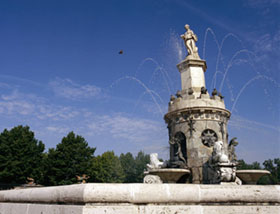
阿兰胡埃斯(Aranjuez)位于西班牙马德里南部,坐落在由塔霍河(Tagus)和哈拉马河(Jarama)灌溉的肥沃山谷中。这个山谷丰富的动植物资源早在12世纪就吸引了贵族和国王的注意。在16世纪,菲利普二世(Philip II)决定将一座原本属于圣地亚哥骑士团(Order of Santiago)的古老宫殿改造成一座更大的皇家宫殿,连同其他工程、建筑和一些水利工程,构成了今天所知的阿兰胡埃斯文化景观的起源。阿兰胡埃斯皇宫周围环绕着总共111.23公顷的花园可供参观。
世界遗产
阿兰胡埃斯的花园是美学空间、植物博物馆,融入了城市的艺术和历史遗产,2001年被联合国教科文组织列为世界遗产,是西班牙历史各个时期(主要是18世纪)的景观、建筑和艺术作品的结合,是启蒙运动的典型代表。
景观特色
阿兰胡埃斯文化景观体现了许多复杂的关系:人类活动与自然的关系、蜿蜒水道与几何形态景观设计的关系、乡村与城市的关系,以及森林环境与富丽堂皇建筑的关系。300多年来,西班牙王室对阿兰胡埃斯文化景观倾注了大量心血,使其向世人展示着奇妙的变化。
建筑风格
尽管在设计上充满原创性,这座建筑仍是奥地利王朝古典主义的典型代表,交替使用白色石头和砖块。最初的计划由费利佩五世于1715年继续,但直到1752年才由费尔南多六世完成。1775年,卡洛斯三世扩建两翼,使宫殿呈现出”U”形特征。
花园艺术
费利佩二世是花园爱好者,特别致力于阿兰胡埃斯:他的时代保留了由建筑师胡安·包蒂斯塔·德·托莱多设计的岛屿花园(Jardín de la Isla),以及紧邻宫殿的国王花园(Jardín del Rey),灵感来自意大利文艺复兴花园。费利佩二世从小就游历欧洲,在旅途中对自然表现出极大兴趣。
王子花园
王子花园位于宫殿东北部,占地150公顷,由蜿蜒的塔霍河环绕,以其丰富的植物资源闻名。花园拥有超过190种不同的树种,被列为植物园。园内矗立着农夫之家(Casa del Labrador),这座宫殿是卡洛斯四世国王的心血结晶。
Geography and History
Aranjuez is located south of Madrid, Spain, situated in a fertile valley irrigated by the Tagus and Jarama rivers. The rich flora and fauna of this valley attracted nobles and kings as early as the 12th century. In the 16th century, Philip II decided to transform an old palace belonging to the Order of Santiago into a larger royal palace, which, along with other works, architecture and hydraulic engineering, constituted the origins of the Aranjuez Cultural Landscape we know today. The Royal Palace is surrounded by a total of 111.23 hectares of gardens open to visitors.
World Heritage
Its gardens are aesthetic spaces and plant museums, integrating the city’s artistic and historical heritage. Listed as a UNESCO World Heritage site in 2001, it represents a combination of landscape, architecture and artistic works from various periods of Spanish history (mainly the 18th century), serving as a typical representative of the Enlightenment.
Landscape Features
The Aranjuez Cultural Landscape embodies many complex relationships: between human activity and nature, between winding waterways and geometric landscape designs, between rural and urban areas, and between forest environments and magnificent architecture. Over more than 300 years, the Spanish royal family has devoted great effort to the Aranjuez Cultural Landscape, showcasing wonderful transformations to visitors.
Architectural Style
Despite its originality in design, the building remains a typical representative of Austrian dynastic classicism, alternating white stone and brick. The original plan was continued by Philip V in 1715, but was not completed by Ferdinand VI until 1752. In 1775, Charles III expanded the two wings, giving the palace its characteristic “U” shape.
Garden Art
Philip II was a garden enthusiast, particularly devoted to Aranjuez: his era preserved the Island Garden (Jardín de la Isla) designed by architect Juan Bautista de Toledo, and the King’s Garden (Jardín del Rey) adjacent to the palace, inspired by Italian Renaissance gardens. Philip II traveled extensively throughout Europe from childhood, showing great interest in nature during his journeys.
Prince’s Garden
The Prince’s Garden (Jardín del Príncipe), located northeast of the palace, covers 150 hectares and is surrounded by the winding Tagus River, renowned for its rich plant resources. The garden houses over 190 different tree species and is classified as a botanical garden. Within the Prince’s Garden stands the Farmer’s House (Casa del Labrador), a palace conceived by King Charles IV as a “country villa” for the royal family to enjoy during long hunting expeditions.








发表回复