
从克莱恩家的农庄到植物园
红豆杉谷植物园在肯塔基州奥尔德姆县,占地的前身是西奥多·克莱恩一家的老宅和苗圃。1941 年,克莱恩和妻子玛莎·李买下当地 34 英亩农地,辟出家宅、农场和苗圃,养大几个孩子。他家世代务农栽花,夫妇两人在这里种粮、养牲畜,也做观赏植物苗圃,专做红豆杉和冬青,一度是这一带最成功的观赏苗圃之一。克莱恩一生育成的六十多个新品种推到栽培,其中美洲冬青的收集是全国最大的一批;1951 年起,他开始种冬青,剪下的枝条在圣诞节前后当作商品出售。
农庄上的房子、附属用房、温室,还有那座当过家庭泳池屋的城堡,多半是克莱恩亲手建起来的,手刻的墙角石、铅条拼花窗、细木作和他收集的石磨盘,至今散在园子各处。1998 年,93 岁的克莱恩去世,开发压力很快逼近。社区志愿者组成的董事会筹款买下这处产业,开始漫长的修复。花园保护协会是一家专门抢救美国独特花园的全国性非营利机构,它把这里列为保护项目,当时全国只有九个这样的项目。2011 年,植物园以「Yew Dell Farm」之名列入国家史迹名录;《园艺》杂志也曾把它评为全国最受推崇的目的地花园之一。2002 年,园子以一个小董事会加一名半职办公人员的规模起步,如今已是国际知名的园艺展示、研究与教育机构。
园中各具脾气的花园
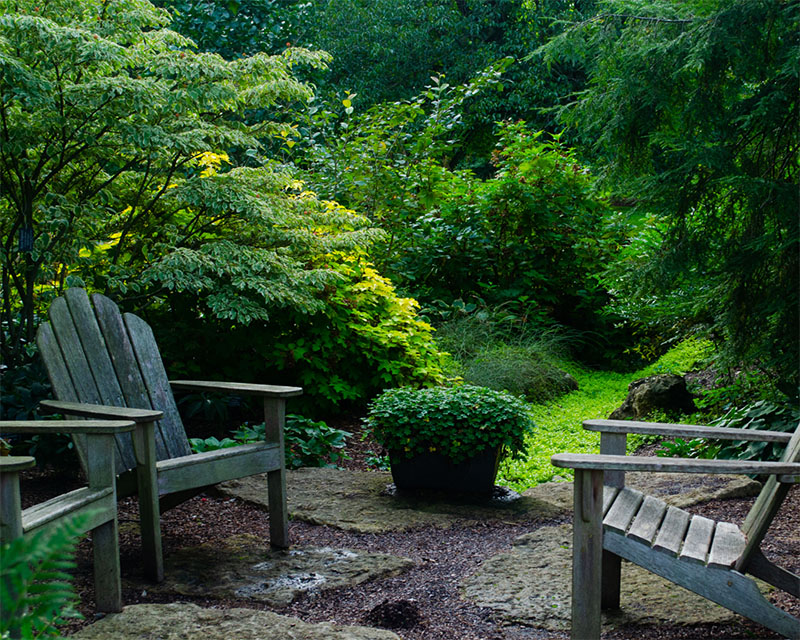
克莱恩一生修整出风格跨度很大的园子:规整的造型花园、传统英式围墙花园,还有他最看重的蛇形花园,专门用常绿植物的姿态、色彩和质感来布置。这些园子不只是看,也要用来试种——园方把各地的候选品种种进来,观察几年,筛出适合本地区气候的,再与当地苗圃行业合作推向生产。园区的植物收藏是这一带最大也最多样的一批,一年到头总有花开着。
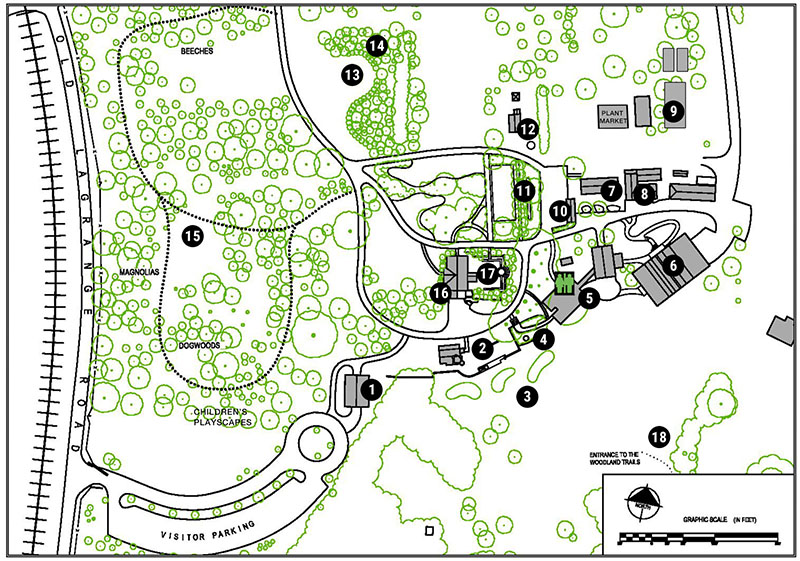
如今园里的分区更多:八英亩以上的树木园、小径两旁种着克莱恩时代的美国山毛榉;两块挂着耐候钢标牌的评估园,一块试草本多年生,一块试灌木;新近落成的城堡花园花了五百一十万美元改造,加了无障碍通道、大片新花园和一处水景,可以一直望到传粉者草甸。那片三英亩的传粉者草甸是 2017 年与肯塔基水道联盟、奥尔德姆县社区基金会合建的,如今是蜜蜂、蝴蝶和蜂鸟落脚的地方。原先完全封闭的围墙花园被改成能走进去的观景台,中央小水池四周围着随季节更换的球根、夏季草花与热带植物。磨盘花园里摆着克莱恩收集的老石磨盘;厨房花园就在一座 1840 年代的原木小屋旁,种着常见和不常见的蔬菜、香草与热带食用植物;雨水花园收集雨后地表径流再慢慢渗进土里,由奥尔德姆县的水土保持项目出资修建。
苗圃、评估与适合本地的植物
植物园至今还在做苗圃生意,这是克莱恩家老本行的延续。苗圃里的植物有三份去处:种给园区展示、进评估试验,以及卖给来访的园丁。收集来源遍及世界各地,只要看起来有希望在肯塔基州长好就引进园内,然后逐项考察长势、抗虫性、观赏价值、是否具入侵风险和整体表现,合格者再摸索繁殖与量产的办法,交由苗圃团队培育成苗出售。春秋两季各有一场面向公众的植物销售,园里的植物也能在在线植物商城订购。
新温室区就建在老盆栽棚原址上,2013 年完成改造,成了全园园艺作业的中枢;旁边的玻璃温室用上太阳能和地热,屋面铺了隔热绿屋顶,能耗不到普通温室的四分之一。园里的雨水湖收集停车场和屋顶流下来的雨水,再抽到生产苗圃供日常用水。植物奖项方面,以克莱恩命名的西奥多·克莱因植物奖在他去世那年设立,由肯塔基大学承办,获奖名单自 1999 年起逐年公布,涵盖蕨类、肯塔基本土种、大乔木、常绿树、观赏草、藤本、阴生与阳生多年生、灌木与小型开花乔木等多个门类,2026 年的入选名单里有杂交榆、红花七叶树和圆锥绣球等。
石头、玻璃与一座城堡
园里的建筑大多有来处。游客中心兼礼品店由一座旧烟草仓库改造,设计出自德莱昂与普里默建筑事务所,2010 年拿到肯塔基州美国建筑师协会最高荣誉奖。玛丽·弗·朗萨沃尔展亭同样出自这两家事务所,2007 年获创新设计荣誉奖,园里的玛莎·李咖啡馆就设在这里。盖恩斯谷仓曾是克莱恩家的邮购苗箱仓库,2005 年大修后与展亭连成一体。玛丽·佩博迪与亨利·菲茨休的温室是园中技术最讲究的一处,靠太阳能、地热和保温屋面把能耗压到极低。
城堡的故事最有戏剧性。1950 年代克莱恩家动手建它,本来是当泳池屋用,他自己焊接、挂吊灯,还在外墙手刻了日晷和家族纹章,壁炉里砌的是人字形砖。宅邸本身是另一段:1941 年买下这块地后,1947 至 1949 年间设计并盖起来,如今是园的行政办公处。园里还散放着几座雕塑,出自路易斯维尔的戴夫·考迪尔和迈克·麦卡锡等艺术家,售出的作品收入一部分回赠给艺术家本人,一部分留给园子。
来看园子的人怎么安排一天
2026 年的开放季从 3 月 3 日到 12 月 19 日,周二至周六上午十点到下午四点,周日中午到下午四点,周一休息。门票方面,会员免费,普通门票十二美元,六十五岁以上老人和六到十七岁青少年八美元,五岁以下儿童免费,凭有效证件的退役军人免费;只在礼品店买东西不必买门票。园里的林间小道每天下午三点半关闭,绕园走一圈大约一英里出头,两片湖水平静,其中一片把雨水送进生产苗圃。
导览有几种走法:可以约人工讲解的团体导览,适合园艺社团和公司活动;也有自助导览和专门给孩子准备的路线,园里还设了二维码导览点,扫码就能按位置导航。日常活动按季排开,周末有植物漫步和树木导览,工作坊与讲座常年开设,一年还有复活节彩蛋、秋季植物销售、冬季灯会等固定节目。会员除全年免票外,还享礼品店与周边商店折扣、课程优惠和季度通讯,并能通过美国园艺学会的互惠入场计划在别处的花园免费入园。志愿者常年招募,园里的雕塑销售和咖啡馆也都设在这批老建筑里。
From the Klein family farm to a botanical garden
Yew Dell Botanical Gardens sits in Oldham County, Kentucky, on ground that was once the Klein family’s home and nursery. In 1941 Theodore and Martha Lee Klein bought 34 acres of farmland, built a house, a farm and a nursery there, and raised their children. His family had farmed and grown plants for generations, and the couple grew grain, kept livestock and ran an ornamental nursery specializing in yews and hollies that became one of the most successful nurseries in the region. Klein introduced more than sixty new varieties to cultivation, and his collection of American holly (Ilex opaca) was among the largest in the country; from 1951 he began planting hollies to cut and sell branches at Christmas.
Klein built most of the farmstead himself, from the family home and support buildings to the greenhouses and the castle that served as the family’s pool house; his hand-carved cornerstones, leaded windows, intricate woodwork and his millstone collection are still scattered through the property. Klein died in 1998 at the age of 93, and development pressure followed almost immediately. A board of community volunteers raised the money to buy the property and began a long restoration. The Garden Conservancy, a national nonprofit dedicated to saving America’s most unusual gardens, named the site a Preservation Project, one of only nine in the country at the time. In 2011 Yew Dell was added to the National Register of Historic Places under the name Yew Dell Farm, and Horticulture Magazine has named it one of the nation’s top destination gardens. It opened in 2002 with a small board and one part-time office worker, and has grown into an institution known internationally for horticultural display, research and education.
Gardens with different characters
Klein’s gardens covered a wide range of styles: formal topiary, a traditional English walled garden and the serpentine garden he considered his signature, laid out to show the form, color and texture of evergreens. They were never meant only for display. The grounds double as trial ground, where plants from elsewhere are grown for years, sorted into the ones that suit local conditions and then handed to regional growers for production. The collection is one of the largest and most varied in the area, and something is in bloom through all twelve months.
The grounds have grown far beyond that. There is an arboretum of more than eight acres, with Klein-era American beeches along one path, and two evaluation gardens entered through Corten steel kiosks, one for herbaceous perennials and one for shrubs. The renewed castle gardens cost $5.1 million, added accessible routes, large new gardens and a water feature, and open out across the pollinator meadow. That three-acre meadow was built in 2017 with the Kentucky Waterways Alliance and the Oldham County Community Foundation from an old Klein family pasture, and is now where honeybees, butterflies and hummingbirds feed. The walled garden, once completely shut off, is now an overlook into the castle gardens, with a small pool and seasonally changing displays of bulbs, annuals and tropicals. The millstone garden shows off Klein’s collected millstones, the kitchen garden sits beside an 1840s log cabin growing unusual edibles, and the rain garden takes runoff after a storm, built with support from Oldham County’s Currys Fork watershed program.
The nursery, evaluation trials and plants for Kentucky
The nursery is still in business, a continuation of the Klein family’s original trade. Its plants go three ways: into the display gardens, into evaluation trials, and home with visitors. Potential candidates are collected from all over the world, brought here to see how they perform in Kentucky, and judged for vigor, pest resistance, ornamental value, risk of invasiveness and overall performance. The ones that hold up get propagation and production methods worked out, then the nursery staff grows them for sale. Public plant sales run in spring and autumn, and the same plants can be ordered through the online plant market.
The new greenhouse complex stands where the old potting shed was; it was upgraded in 2013 and now anchors horticultural work on the grounds. Beside it, a glasshouse runs on solar and geothermal power under an insulated green roof, using less than a quarter of the energy of a typical greenhouse. A rainwater lake collects runoff from parking lots and roofs and pumps it to the production nursery. On the awards side, the Theodore Klein Plant Award was established in the year Klein died and is run with the University of Kentucky; the annual list has been published since 1999 and covers ferns, Kentucky natives, large deciduous trees, evergreens, ornamental grasses, vines, shade and sun perennials, shrubs and small flowering trees, with a hybrid elm, a red buckeye and a panicle hydrangea among the 2026 selections.
Stone, glass and a castle
Most of the buildings have a story. The visitor center and gift shop is a converted tobacco barn designed by deLeon and Primmer Architecture Workshop, which won the highest Honor Award from the Kentucky chapter of the American Institute of Architects in 2010. The Mary F. Rounsavall Pavilion, from the same firm, took the chapter’s 2007 Honor Award for innovative design and houses Martha Lee’s Café. Gheens Barn was the family’s mail-order kit barn, comprehensively rehabilitated in 2005 and joined to the pavilion. The Mary Peabody and Henry Fitzhugh Greenhouse is the most technically demanding building on the grounds, using solar and geothermal power to hold its energy use down.
The castle has the most dramatic story. The Kleins built it in the 1950s as a pool house, and Theodore did much of the work himself, welding and hanging the chandeliers and hand-carving a sundial and the family crest into the outer walls, with herringbone brick lining the fireplace. The house itself is another chapter: bought in 1941, designed and built between 1947 and 1949, it now serves as the administrative offices. Sculptures are placed around the grounds as well, by Louisville artists such as Dave Caudill and Mike McCarthy; sales split the proceeds between the artists and the gardens.
How visitors spend a day
The 2026 season runs from March 3 to December 19. Tuesday through Saturday the gates are open from 10 a.m. to 4 p.m., Sunday from noon to 4 p.m., and Monday they are closed. Members come in free; general admission is $12, seniors 65 and over and youths 6 to 17 pay $8, children 5 and under are free, and veterans with ID are free. Shopping in the gift shop does not require a ticket. The woodland trails close daily at 3:30 p.m.; the walk around the grounds runs a little over a mile past two quiet lakes, one of which sends collected rainwater to the production nursery.
There are several ways to be shown around: guided group tours for garden clubs, civic groups and company outings, self-guided routes, and tours written for children, with QR codes at points on the grounds that navigate by location. The year-round program runs plant walks and tree tours at weekends, along with workshops and classes, and the calendar fills with seasonal fixtures such as Easter egg events, the fall plant sale and the winter light show. Membership brings free admission all year, discounts in the gift shop and at local retailers, reduced rates on classes, a quarterly newsletter, and reciprocal entry at gardens elsewhere in the country through the American Horticultural Society program. Volunteers are welcome year-round, and both the sculpture sale and the café sit in these reused buildings.
相关文章:
 美国 布法罗市公共植物园 Buffalo Botanical Gardens – 西纽约地区的园艺中枢
 加拿大皇家植物园 Royal Botanical Gardens – 1100公顷保护地的加拿大最大植物园
 英国 伯明翰植物园 Birmingham Botanical Gardens – 植物迁地保护与科普基地
 美国西雅图米勒植物园 Elisabeth Carey Miller Botanical Garden – 私人收藏植物园
 美国 旋转轮植物园Rotary Botanical Gardens – 植物迁地保护与科普基地
 美国 Olbrich植物园 Olbrich Botanical Gardens 威斯康星州麦迪逊市公立植物园 – 植物迁地保护与科普基地
 苏格兰 德拉姆兰里格城堡花园 Drumlanrig Castle Gardens – 苏格兰国家级造景园林遗产
 美国莫比尔植物园 Mobile Botanical Gardens – 北美生物最丰富的地
发表回复