

造园师在菲英岛上的日本园林
丹麦南丹麦大区菲英岛 Broby 附近有一座日本庭园,官方名字是 De Japanske Haver。丹麦语里 De Japanske 是日本的意思,Haver 是庭园的意思。园主是彼得·达尔斯加德和安妮·达尔斯加德,园艺是两人的本行:彼得受过造园师的正规训练,安妮有园艺学的硕士学位和土壤物理博士学位。
彼得想建一座日本庭园的想法持续了三十年。为此他去过日本三十多次,在京都的大学里念书,还跟着一位日本造园师做过两年多的传统庭园工程,学日本庭园的历史和做法。2000 年 3 月买下这块地时他就已经打算改成日式,只是当时没想着对外开放。真正决定开门迎客是 2005 年秋天的事,园子 2007 年 5 月 1 日开放,开园时只有四座庭园。
安妮 2003 年第一次去日本后加入进来。她的园艺学背景后来用在了园子的植物配置和土壤上,咖啡馆的菜式也是她张罗的。这个园子从两人自己的地变成一座对外开放的景点,前后花了七年。
八座园子各有一番道理
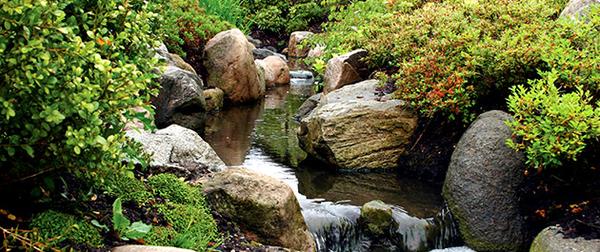
园方自己的页面列出八座对外开放的庭园,另有一座私家庭院。2019 年一篇报道写的是七座,美国日本庭园协会收录的旧册子写六座。生命之园沿着一条溪流展开,溪水一路穿过瀑布和平静的水面,两条溪在中间汇合成一条,再流进第一座湖。另一条小溪汇进湖里,象征孩子的出生。水面又急了一阵,之后重新平静下来,最后没入林中那座宝塔,宝塔在日本相当于教堂。再往前是永恒的生命。
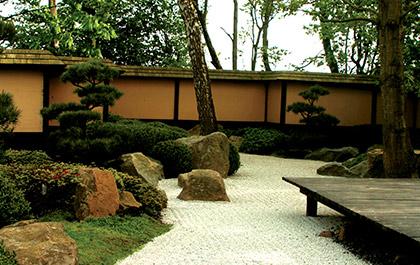
冥想园是枯山水,用白色花岗岩砾石耙出波纹来代替水,三条抽象的河在露台边的湖里汇合,然后离开园子。紧挨着的是茶屋,按原来的尺寸建造,拉门糊和纸,地上铺草垫。庭院园只有 3.3 平方米,据说这是世界上最小的庭园形式,窗框就是取景框,地面不铺,与土直接接触,屋里的空气因此会凉一些。
寺院园走禅宗的路子,园子极简,元素少,不扰视线,让人在空里安静下来。林园在茶屋后面,种着老树,林下是杜鹃和绣球,花期从春到秋不断。观景园和丹麦园子的走法相反,围着湖走、往里看。游步园把彼得在各地见过的自然景象压缩成一段路:岩壁取自新西兰,小溪来自瑞典,最大的瀑布照着美国的一处仿做。
多数庭园下面都配了短视频和图片展示,可以先在网页上走一遍。园方把每座园子的来历和用意写得很细。
石头、水和种植
这座园子的骨架是石头堆出来的。2006 年夏天,彼得的前雇主从日本过来看过设计,那一季用掉的天然石料超过 800 吨,其中 770 吨来自本地,其余 30 吨从瑞典运来,用在冥想园里。全园的树木和灌木超过 5000 株,地被植物约 1.32 万株。欧洲一份日本庭园名录记的数字更高,天然石料约 900 吨,地被植物约 1.88 万株。五条溪流由一台水泵供给,每小时送水 15 万升,约等于每秒七桶。
园子的面积各方说法不一:按园方当年留下的记载,原有草坪 3500 平方米、果树 1000 平方米、多年生花境 1000 平方米;欧洲日本庭园名录记的是约 7500 平方米;一本旅游杂志写 6500 平方米。三处数字口径不同,本站没有解释差别在哪里。同一本杂志记的年访客数是 2.5 万人左右,另一处来源写 3.3 万人。
园子逐年往外扩。2008 年游步园添了门廊,茶屋旁放了候车的长凳,2009 年建了新的入口,2010 年沿四周围栏装上灯串,夜间开放时围栏会亮起来,2011 年添了日式建筑和庭院园,2012 年开放寺院园,2013 年从寺院园另一侧开了林间步道。盆景园后来也重新整修过。
茶室、咖啡馆和商店
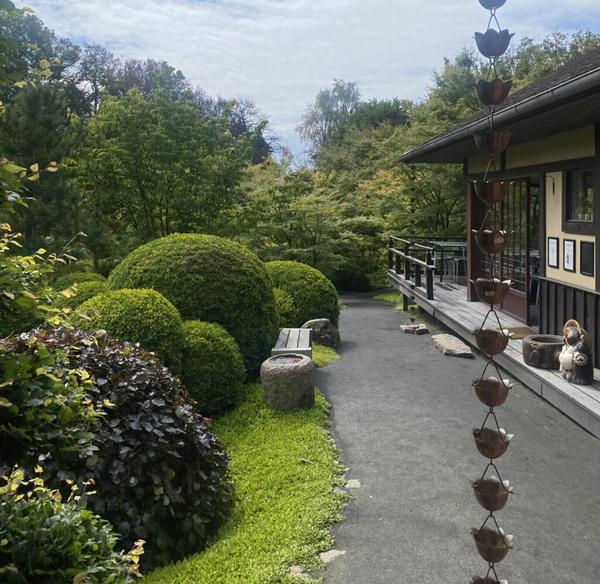
茶园在最里面,要走过一条林中小路才到。茶屋照日本规格建,有茶室、走廊和备茶厨房,屋里的一切活动都在地面上进行。特殊日子里会举行茶道仪式,仪式前走那一段路本身就让人静下来。仪式之后可以在园里找个地方坐一坐。
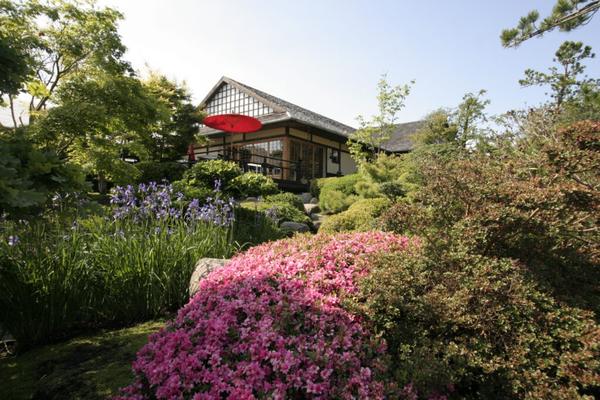
咖啡馆在日式大房子里,菜单以日式家常为主,有乌冬汤和各种日式肉菜,另有素食的御好烧和乌冬,按日本习惯上菜,也供应抹茶。甜点那边也做丹麦式的蛋糕和咖啡,面包、蛋糕、蛋白杏仁霜蛋糕都是自家做的。店里挂着食品监管署给出的评价等级。
商店在咖啡馆同一片区域里,主打从日本挑选的瓷器,另有园艺工具、花瓶和台灯。2026 年新开了一批日本花岗岩制品的展卖。盆景园里摆着更多的盆景,售卖的盆景树木直接从日本运来,由彼得亲手挑选。还有一类日本庭园用的造型树苗单独出售。
园方每年组织日本主题的活动,其中日本日活动最有名。另有面向团体的讲解和活动方案,四种方案分别配自助餐、咖啡点心或日式小酌,费用从每人 135 克朗起。野餐区有顶棚,种着紫藤,能容纳约 40 人或者一车人。
开放时间、门票和无障碍
园子每年 5 月 1 日到 9 月 30 日开放,每天 10 点到 18 点;咖啡馆 11 点到 17 点。周一从 5 月 1 日到圣约翰节之间闭园,8 月 16 日起一直到季末周一也闭,圣灵节后的第二个周一照常开门。普通狗不能进园,只有工作犬可以,园方会备水。
门票成人 90 克朗,10 到 17 岁的孩子 50 克朗,10 岁以下免费;季票成人 120 克朗,孩子 75 克朗。团体来园每人 75 克朗,10 人以上可按团体价入园;20 人以上的讲解需要提前预约,园方也接待人数更少的团体。门票价格以园方页面的当季公告为准。
轮椅和助行器可以通行,整个园子从铺装路面上都能看见,从停车场到园门有一段平整的砖道。不能进园的狗可以在入口附近的阴凉处和停车场歇脚,园方同样给水。
A Japanese Garden Complex on Funen
Near Broby on the Danish island of Funen, in Denmark’s Region of Southern Denmark, there is a Japanese garden called De Japanske Haver. In Danish, De Japanske means Japanese and Haver means garden. The owners are Peter Dalsgaard and Anne Dalsgaard, and horticulture is what they do: Peter trained as a landscape gardener, and Anne holds a master’s degree in horticulture and a doctorate in soil physics.
Peter had wanted to build a Japanese garden for thirty years. He travelled to Japan more than thirty times, studied at a university in Kyoto and worked for more than two years with a Japanese garden designer on traditional garden projects, learning the history and the craft. He bought the property in March 2000 already intending to turn it into a Japanese-style garden, but had no plan to open it to the public. The decision to open came in the autumn of 2005, and the gardens opened on 1 May 2007 with four gardens in place.
Anne joined after her first visit to Japan in 2003. Her horticultural background later went into the planting and the soils, and she also runs the kitchen of the café. It took the couple seven years to turn their own land into a visitor attraction.
Eight Gardens, Each With Its Own Reasoning
The garden’s own site lists eight gardens open to visitors plus a ninth private one. An account from 2019 gives seven, and a brochure collected by a North American garden association lists six. The Garden of Life follows a stream that runs through waterfalls and calm stretches; two streams join into one, which flows into the first lake. A smaller stream flows into that lake as well, symbolising the arrival of a child. The water grows turbulent for a moment, then settles again, and finally disappears into the last lake in the woods, where visitors pass a pagoda, the Japanese counterpart of a church. Beyond it lies eternal life.
The Meditation Garden is a dry landscape in which raked white granite chippings stand in for water, with three abstract rivers converging in a lake by the terrace before leaving the garden. The tea house next to it was built to original scale, with sliding rice-paper doors and rice mats on the floor. The Courtyard Garden measures just 3.3 square metres and is said to be the smallest garden form in the world; the window frames act as the frame of a three-dimensional picture, and with no floor and direct contact with the earth, the air inside cools down.
The Temple Garden follows Zen Buddhism and is deliberately spare, with few elements to disturb the eye and help the visitor reach inner stillness. The Forest Garden lies behind the tea house, with old trees and rhododendrons and hydrangeas understorey that flower from spring into autumn. The Viewing Garden turns Danish convention on its head: you walk around the pond and look inwards. The Walking Garden compresses natural scenes Peter has encountered into a single route, with crags from New Zealand, brooks from Sweden and a large waterfall modelled on one in the United States.
Most of the gardens have short video presentations and photo galleries underneath them, so a virtual walk is possible before a visit. The owners have written up the background and the reasoning behind each garden in detail.
Stone, Water and Planting
The bones of the garden were built from stone. In the summer of 2006, Peter’s former employer in Japan came over to advise on the design, and more than 800 tonnes of natural stone were placed that season, 770 tonnes of it from the local area and 30 tonnes brought from Sweden for the Meditation Garden. More than 5,000 trees and shrubs and roughly 13,200 ground-cover plants went in. A directory of Japanese gardens in Europe gives higher figures, about 900 tonnes of natural stone and some 18,800 ground-cover plants. A pump supplies the five brooks, moving about 150,000 litres of water an hour, roughly seven buckets a second.
Figures for the size of the site differ between sources: the records left by the builders list an original lawn of 3,500 square metres, 1,000 square metres of fruit trees and 1,000 square metres of herbaceous border; a directory of Japanese gardens in Europe gives approximately 7,500 square metres; a travel magazine writes 6,500 square metres. The three use different measures and the site does not explain the difference. The same magazine puts annual visitors at around 25,000, while another source writes 33,000.
The site keeps growing. The Walking Garden gained a gateway in 2008, and a waiting bench was put by the tea house, a new entrance followed in 2009, lights were installed along the fence in 2010 so that the whole boundary glows on evening openings, a Japanese-style building and the Courtyard Garden came in 2011, the Temple Garden opened in 2012, and a nature trail was opened from the other side of the Temple Garden in 2013. The Bonsai Garden was later reworked.
Tea House, Café and Shop
The Tea Garden lies at the far end, reached by a path through the woods. The tea house was built to Japanese specifications, with a tea room, a corridor and a preparation kitchen, and everything in it happens on the floor. Tea ceremonies are held on special occasions, and the walk up to the tea house is part of the point. After the ceremony there is a place in the garden to sit and let the mind settle.
The café sits in the large Japanese-style building. The menu leans towards Japanese home cooking, with udon soup and various Japanese meat dishes, vegetarian okonomiyaki and udon, everything served as Japanese tradition dictates, and matcha alongside. The baking side is more Danish: rolls, cakes and layer cakes are made in the kitchen. The café displays the rating it has been given by the food and veterinary authorities.
The shop is in the same building as the café and is best known for porcelain selected in Japan, alongside garden tools, vases and lamps. A new display of granite products from Japan opened in 2026. The Bonsai Garden holds more bonsai, and the bonsai trees on sale come straight from Japan, chosen by Peter himself. A separate group of Japanese garden trees, known as niwaki, is also for sale.
The owners also run Japanese events each year, the best known being the Japan Days. There are guided tours and activity packages for groups, four of them, combined with a buffet, with coffee and cake, or with a Japanese-style drinking menu, from 135 kroner per person. There is a covered picnic area planted with wisteria that takes about 40 people or a coach load.
Opening Hours, Tickets and Access
The gardens open from 1 May to 30 September each year, daily from 10 am to 6 pm, with the café from 11 am to 5 pm. They close on Mondays between 1 May and Midsummer, and again from 16 August to the end of the season, though they open on the second Monday after Whitsun. Ordinary dogs are not admitted and only working dogs are allowed in, with water provided for them.
Tickets cost 90 kroner for adults and 50 kroner for children aged 10 to 17, and are free for children under 10. Season passes are 120 kroner for adults and 75 kroner for children. Groups pay 75 kroner per person, with the group rate applying from ten people upwards; tours for 20 people or more need to be booked in advance, though smaller groups are also welcomed. Prices follow the current season notice on the garden’s own site.
Wheelchairs and rollators are welcome, and the whole garden can be seen from the paved paths, with a level tiled walkway from the car park to the entrance. Dogs that cannot come in are made comfortable in the shade near the entrance or on the large car park, and are given water as well.
相关文章:
 丹麦 比克高登家庭公园 Birkegårdens Haver – 五座花园与最大日本庭园
 丹麦 彼得·汉森花园 Peter Hansens Have – 北欧最大私人植物收藏园之一
 丹麦 Lille Malunds Have 花园 – 欧洲日德兰中部典型的英式家庭花园
 德国 凯撒斯劳滕日本庭园 Japanischer Garten Kaiserslautern – 德国最大日式庭园
 美国 森美博物馆和日本花园 – 佛罗里达州博卡拉顿的日本文化体验中心
 英国 Cowden 日本花园 Cowden Garden – 苏格兰唯一由女性设计的日本庭园
 奥地利 Seeboden 盆景博物馆 – 欧洲最大日式盆景中心
 英国 巴茨福德树木园 Batsford Arboretum – 英国非营利樱花国家收藏园
发表回复