

从旧鱼塘起步的水生植物苗圃
苗圃藏在德国下萨克森州策勒县埃舍德郊外的一片水塘群里。这片水面当地人早就知道,但水生植物苗圃开在这里,知道的人不多。老板约尔格·彼得罗夫斯基(Jörg Petrowsky)学的是多年生植物园艺,1985 年从头做起,把几口旧养鱼塘改成种睡莲的水塘,最深的一口比四周地面低 1.2 米。从 1985 年算起,这门生意在德国的吕讷堡荒原南缘已经做了四十来年。苗圃的网店叫 Seerosensorten,德语直译就是「睡莲品种」。
当年没有现成的培训可跟。睡莲和沉水植物在欧洲不算独立行当,彼得罗夫斯基的技术是在自家池边试出来的。2009 年德国 Landvolk 的行业报道提到,他和伴侣一起经营,客户包括批发商、多年生植物苗圃和园艺中心,市政部门也是买家,园里有 15 名员工分管采种繁殖、栽种和分级整理,经批发、苗圃、园艺中心几条渠道流转的水生植物有 200 多个品种。睡莲是主营,自有收藏也在 200 个品种以上,其中近 100 个卖给顾客,其余留作育种材料。8 月里,那些旧鱼塘连成一片花海,是苗圃一年中最热闹的时候。德国的《Stauden》行业刊物和德语睡莲门户 seerosenforum.de 都收录过这家苗圃,后者把它列在睡莲种植者名录里。
品种与产品线
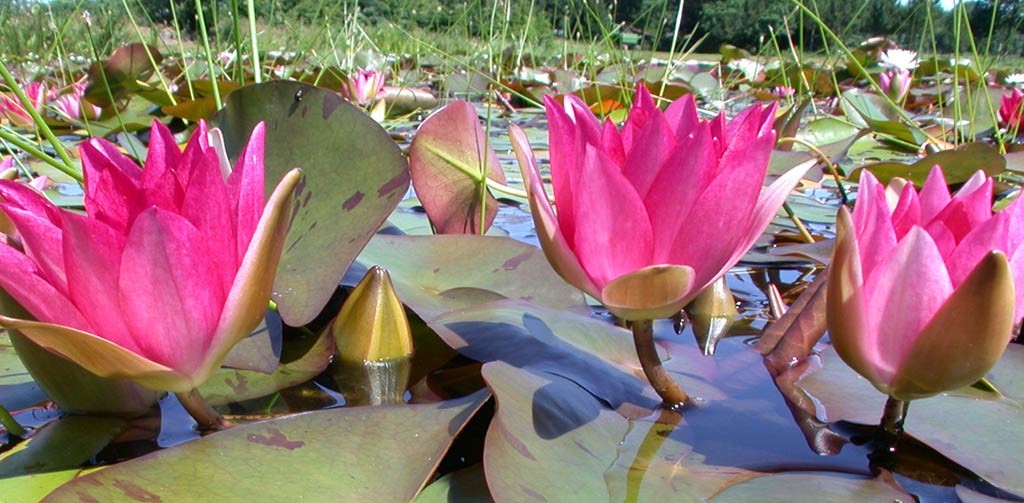
店里约八十个盆栽睡莲品种批量供应,沼泽与水生植物另有 160 多个种和品种,漂浮和沉水植物都算在内。睡莲按大小分成大花型(种深 70 到 150 厘米)、中型(40 到 80 厘米)、小型(30 到 50 厘米)和迷你型几档。网上的分类数量能看出结构:睡莲店 121 项,水生植物店 186 项;水生植物按水位另列分区,沼泽区 153 项、湿润区 101 项、浅水区 49 项、漂浮与沉水区 33 项、小池用 8 项、溪流用 18 项。黄睡莲属(Nuphar)单独成类,一共六项。
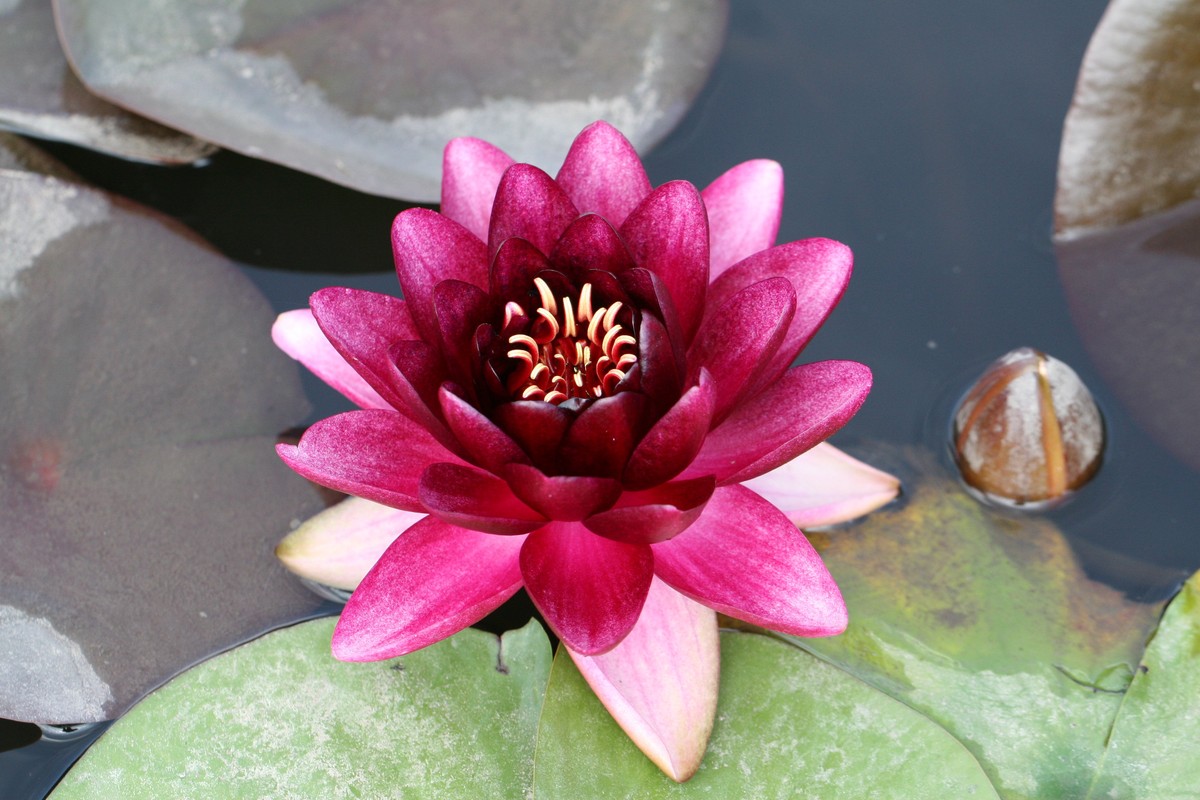
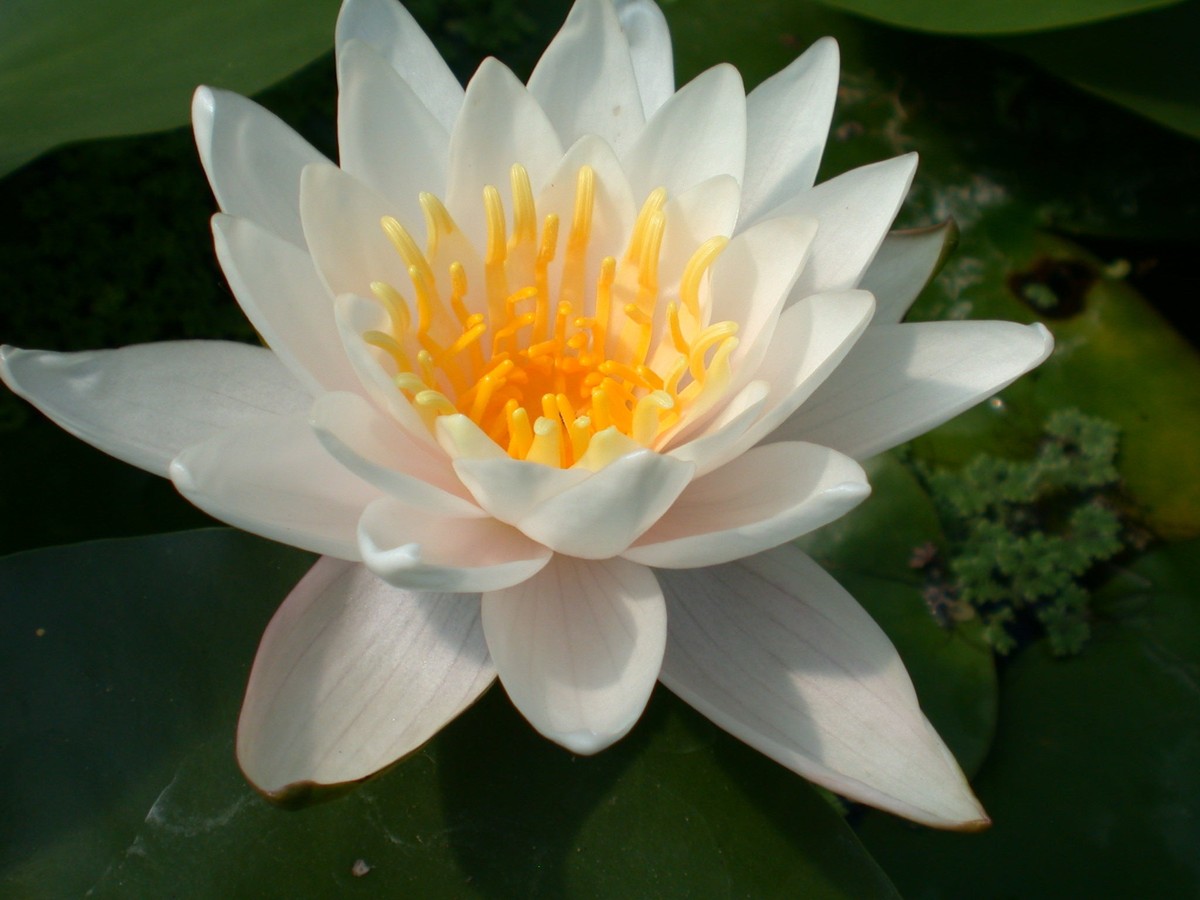
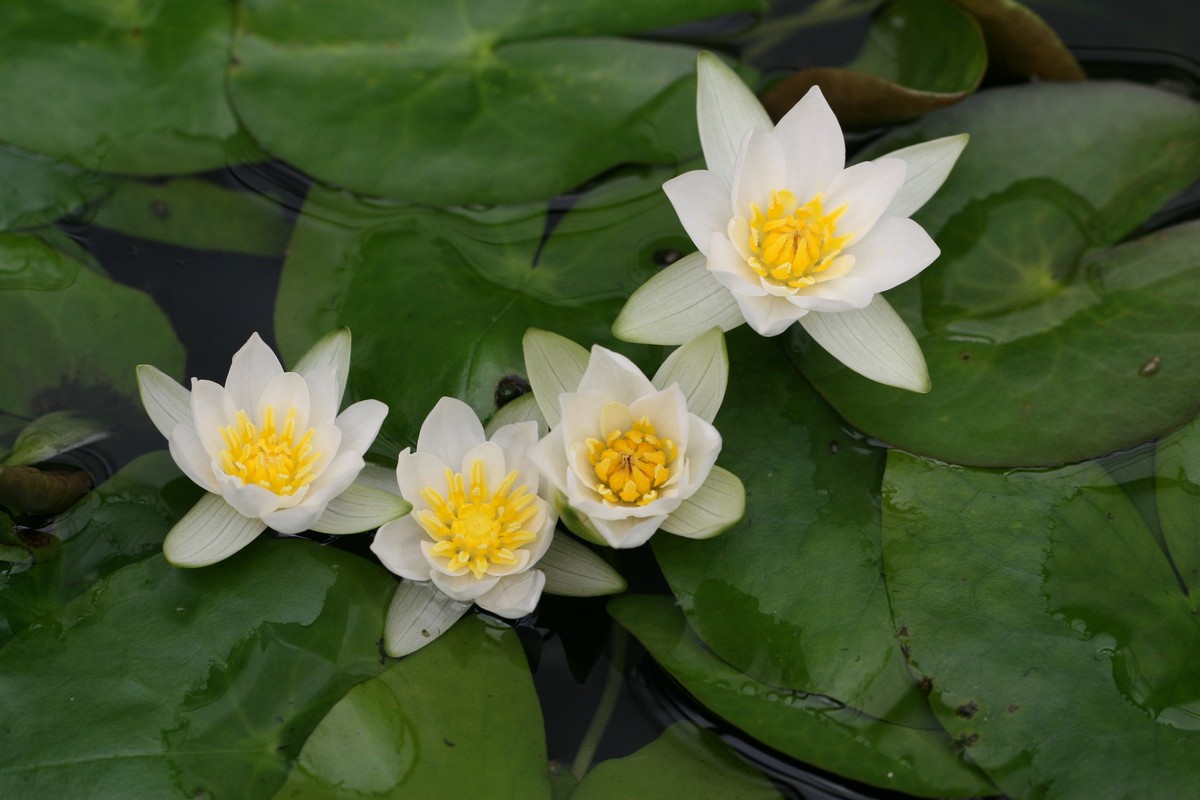
挑品种先看水深。大水塘推荐白花的 ‘Gladstoniana’ 和红花的 ‘Escarboucle’。小池塘适合长势弱的白色 ‘Walter Pagels’,水深 20 到 50 厘米,一株只占半到一平方米水面,花朵直径能到 10 厘米;水面大的用 ‘Sunny Pink’,要留出两平方米以上,花朵能开到 20 厘米。最迷你的是四棱睡莲 Nymphaea tetragona,花只有 2.5 到 5 厘米,迷你池和木桶都放得下,半阴处也能照常开花。黄色睡莲多出自热带,浅水里几乎没有完全耐寒的。
母本和新品种的观察放在苗圃自留的一块一公顷睡莲塘里,同时供着 150 个 Nymphaea 品种做对照,看准了再决定要不要放量。
苗圃怎么种、怎么繁殖
植株基本自己繁育:从采种、播种或扦插开始,另一部分靠分株繁殖,先在薄膜棚和温室里育苗,再移到露天的池子和花床继续养,各处按不同水深分开管理。商品苗按容器出货,水生植物多用一升的盆,睡莲用大一些的容器,另有供木桶栽种的热带植物,以及为观赏池专门培育的品种,用矿质基质,不加缓释底肥。
除了观赏用途,苗圃还做水体修复和净化用的植物。芦苇被种进市政污水处理厂,根系能吸收重金属、提高水里的含氧量,也带动细菌活动;河道护岸用的本地植物把根球裹上椰纤维球,下水后不会散开。野外复垦这类修复工程另有专门的复原植物。
销售渠道与交付方式
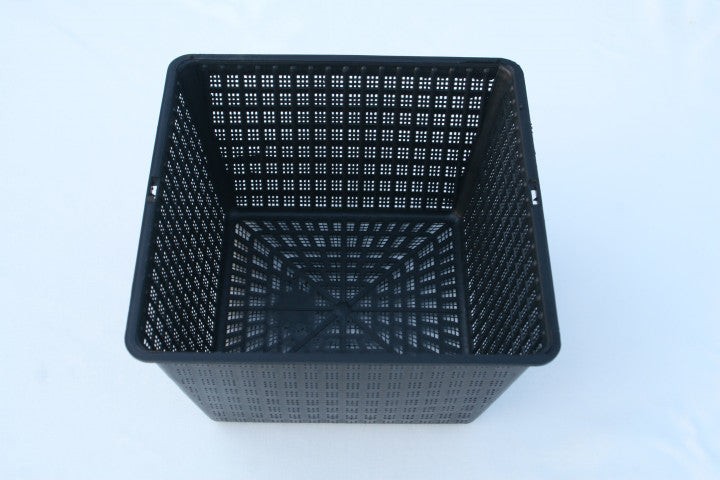
自家网店分睡莲店和水生植物店两大块,还兼卖水生植物专用缓释肥、睡莲基质、塑料种植篮和礼券。睡莲按大小分档,水生植物按水位分成湿润区、浅水区、漂浮与沉水区、小池用和溪流用,买的时候照自家池子的深浅对号入座就行。
批发是另一条主线,园艺中心、园林绿化工程公司、批发商和零售点都在供货名单上。发货走 DHL,正常 2 到 3 个工作日送达,3 月到 9 月每天发运。运费德国境内 7.90 欧元,欧盟国家 25.90 欧元,瑞士、挪威和列支敦士登 49 欧元;奥地利目前因新包装法规还寄不了。账期客户按 8 个工作日付款,发往欧洲其他国家的单子一律先款后货。
栽种知识与到访建议
店里专门有一页讲种植深度,指睡莲发芽点到水面的距离。水深 1 米的池子,睡莲种在 30 厘米高的盆里,实际深度只剩 70 厘米,直接种进池底才是 1 米。深水型品种种浅了会光长叶子少开花,浅水型种深了又够不到水面。
用什么盆也有讲究:浅水用 2 到 10 升的盆,中等 5 到 20 升,大苗 20 到 30 升以上。土用厚重的黏壤土或矿质土,泥炭和堆肥不适合睡莲。每个盆一季放两颗缓释肥球。下沉前先把盆浇透,免得基质浮起来;水深的池子先把盆降到一半深度,等叶子长到水面再挪到最终位置。
开花也有讲究,多数品种在上午 10 点到下午 3 点之间开,单朵花只维持三到五天就沉回水下;叶片最好只盖住水面的三分之一,水面才显得开阔。店里可以按买家的池子情况出配植建议,从花园池塘、观赏池、天然泳池、溪流,到锌桶、酒桶、锦鲤池、迷你池和植物过滤池都有对应方案。苗圃全年可以下单,植株在露天过冬,开春直接种进池子就行;想先看一眼花,得提前约好,6 月到 8 月的花期最值得来。
A water plant nursery that started on old fish ponds
The nursery sits among the ponds on the outskirts of Eschede, in the district of Celle in Lower Saxony, Germany. The water is well known locally, but a water plant nursery hidden here has stayed largely unknown. Its owner Jörg Petrowsky trained as a perennial gardener and started from scratch in 1985, converting a few old trout ponds into lily ponds, the deepest dug 1.2 metres below the surrounding ground. Counting from 1985, the business has been running in the southern Lüneburg Heath for more than forty years. The nursery runs its online shop under the name Seerosensorten, which translates from German as water lily varieties.
There was no established training for the trade at the time. Water lilies and submerged plants do not count as a separate trade in Europe, so Petrowsky worked out the techniques himself at his own ponds. A 2009 report from the Landvolk farming news service described him running the nursery together with his partner, supplying wholesalers, perennial nurseries and garden centres, with municipalities among the buyers. Fifteen staff handled seed propagation, planting and grading, and more than two hundred varieties of marsh and water plants moved through the wholesale, nursery and garden centre channels. Water lilies were the main business: the collection itself held over two hundred varieties, of which close to a hundred were sold to customers while the rest were kept as breeding stock. In August the former fish ponds turn into a single sheet of flowers, the busiest time of the year. The German trade magazine Stauden has featured the nursery, and the German water lily portal seerosenforum.de lists it among its growers.
What the nursery grows
Around eighty water lily varieties are offered in pots in larger quantities, and the marsh and aquatic plant range covers more than 160 species and varieties, including floating and submerged plants. Water lilies are sold in size groups: large flowered types for planting depths of 70 to 150 centimetres, medium types for 40 to 80 centimetres, small types for 30 to 50 centimetres and miniatures. The shop categories show the same picture: 121 items in the water lily shop and 186 in the aquatic plant shop; the aquatic plants are also listed by water depth, with 153 in the marsh zone, 101 in the moist zone, 49 in the shallow water zone, 33 with floating and submerged plants, eight for mini ponds and 18 for streamside planting. Yellow pond lilies of the genus Nuphar form a separate group of six.
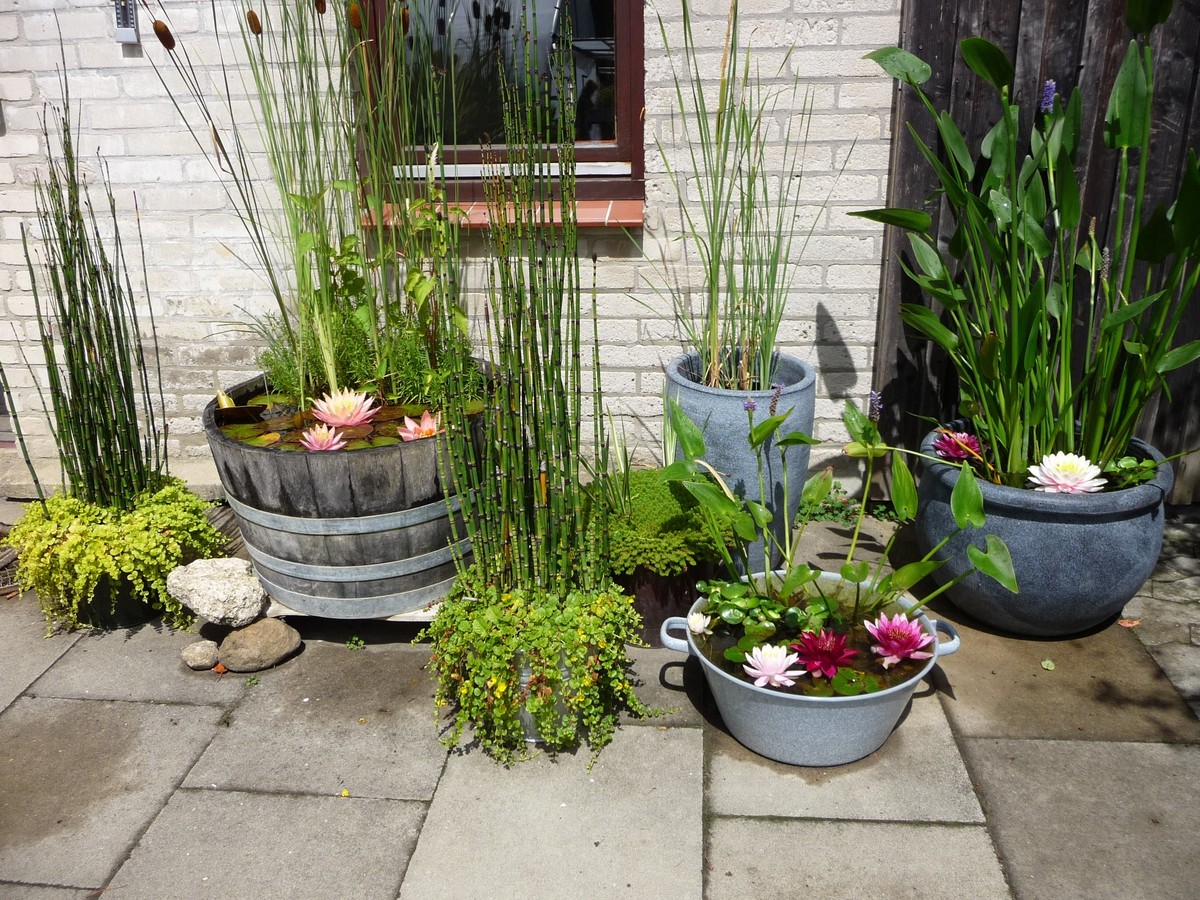
Depth comes first when choosing a variety. For a large pond the recommendations are the white ‘Gladstoniana’ and the red ‘Escarboucle’. A small pond suits the weakly growing white ‘Walter Pagels’, which works at 20 to 50 centimetres depth, needs only half a square metre to one square metre of surface and carries flowers up to 10 centimetres across; a larger water surface calls for ‘Sunny Pink’, which wants two square metres or more and opens flowers up to 20 centimetres. The smallest is the four-petalled Nymphaea tetragona, whose flowers measure 2.5 to 5 centimetres; it fits mini ponds and even tubs, and flowers reliably in half shade. Most yellow water lilies come from tropical origins, so few are reliably hardy in shallow water.
Mother plants and new selections are observed in a one hectare lily pond the nursery keeps for itself, where 150 Nymphaea varieties are compared side by side before anything is scaled up.
How the plants are grown and propagated
Almost everything is propagated on site. It starts with seed collection, sowing or cuttings, and other varieties are increased by division; young plants are raised under film and in greenhouses and then moved out to ponds and beds where each group is kept at its own water depth. Plants are shipped in containers, aquatic plants mostly in one litre pots and water lilies in larger ones; there are tropical plants for tub planting and a selected range for swimming ponds, raised in a mineral substrate without added slow release fertiliser.
The nursery also supplies plants for water restoration and purification. Reeds go into municipal sewage treatment plants, where the roots take up heavy metals, raise the oxygen content of the water and keep bacterial activity going. Native plants for canal banks are grown with their root balls wrapped in coconut fibre so they do not wash away. Separate restoration plants are supplied for recultivation projects in the wild.
How to buy and how delivery works
The shop is split into a water lily shop and an aquatic plant shop, and also carries slow release fertiliser for demanding water plants, lily soil, plastic planting baskets and gift vouchers. Water lilies are grouped by size and aquatic plants by water depth, in moist zone, shallow water zone, floating and submerged, mini pond and streamside groups, so buyers can match the range to the depth of their own pond.
Wholesale is the other main line, with garden centres, landscaping firms, wholesalers and retail nurseries on the customer list. Delivery goes by DHL and normally takes two to three working days, with daily despatch from March to September. Shipping costs 7.90 euros within Germany, 25.90 euros to EU countries and 49 euros to Switzerland, Norway and Liechtenstein; Austria cannot currently be served because of new packaging rules. Invoice customers pay within eight working days, while orders sent to other European countries are settled in advance.
Planting advice and when to visit
One page of the shop explains planting depth, the distance from the point where the lily shoots to the water surface. In a pond one metre deep, a lily planted in a pot 30 centimetres high actually sits at 70 centimetres; planting straight into the pond bed gives the full metre. Deep water varieties planted too shallow put all their energy into leaves and flower less, while shallow types planted too deep may never reach the surface.
The container matters too: 2 to 10 litres for shallow planting, 5 to 20 litres for medium and 20 to 30 litres or more for large plants. The soil should be heavy loamy garden soil or a mineral substrate; peat and compost do not suit water lilies. Two slow release fertiliser pellets per container are enough for a season. Water the container thoroughly before sinking it so the substrate does not float up, and in deeper ponds lower the container halfway first, wait until the leaves reach the surface and then move it to its final position.
Flower timing matters as well. Most varieties open between ten in the morning and three in the afternoon, and a single flower lasts only three to five days before it withdraws under the surface. Leaves are best kept to about a third of the water surface so the pond still looks open. The shop can work out a planting scheme for the particular pond, covering garden ponds, swimming ponds, natural pools, streams, zinc tubs, wine barrels, koi ponds, mini ponds and plant filters. Orders can be placed all year, since the plants overwinter outdoors and go straight into the pond in spring; anyone who would rather look at the flowers first needs to arrange a visit in advance, and the flowering season from June to August is the best time to come.
相关文章:
 美国 百合花水生植物花园 Lilyblooms Aquatic Gardens – 水生植物零售与邮购品牌
 德国 睡莲农场 Seerosenfarm – 睡莲与荷花四百余种及栽培知识
 德国 水花园爱好者协会 – 致力于推动水生和沼泽植物的研究、栽培与应用
 美国 William Tricker 水景公司 – 历史最悠久的水生花园商店
 美国水生植物与睡莲苗圃 Pond Megastore – 根据不同地
 德国 复垦植物供应 Repo‑Pflanzen – 数十种欧洲沼泽与水生植物
 德国 梦幻睡莲 Traumseerose – 德国睡莲销往欧洲数十国
 美国 休斯敦池塘协会 – 德州中部池塘园艺志愿者团体
发表回复