
庄园由来
海斯特库姆花园(Hestercombe Gardens)在英国英格兰西南部萨默塞特郡的小镇切登菲茨潘(Cheddon Fitzpaine),靠近汤顿(Taunton)以北约 3.5 公里,处在昆托克丘陵(Quantock Hills)东缘的一片山谷里。这一带的庄园最早见于 854 年的盎格鲁-撒克逊宪章记载,1391 年被约翰·沃雷爵士(Sir John Warre)收购,从此沃雷家族(Warre family)连续持有这座庄园直到 1872 年,长达近五百年。1750 年,业余画家兼景观设计师科普尔斯通·沃雷·班普菲尔德(Coplestone Warre Bampfylde)从父亲手中继承庄园,在庄园北面的山涧里建成了一座占地约 35 英亩的乔治亚景观园,设有湖泊、瀑布、神庙和柱廊,这条十八世纪作品后来被誉为英格兰湖畔园艺的代表作之一。
两位设计师的合作
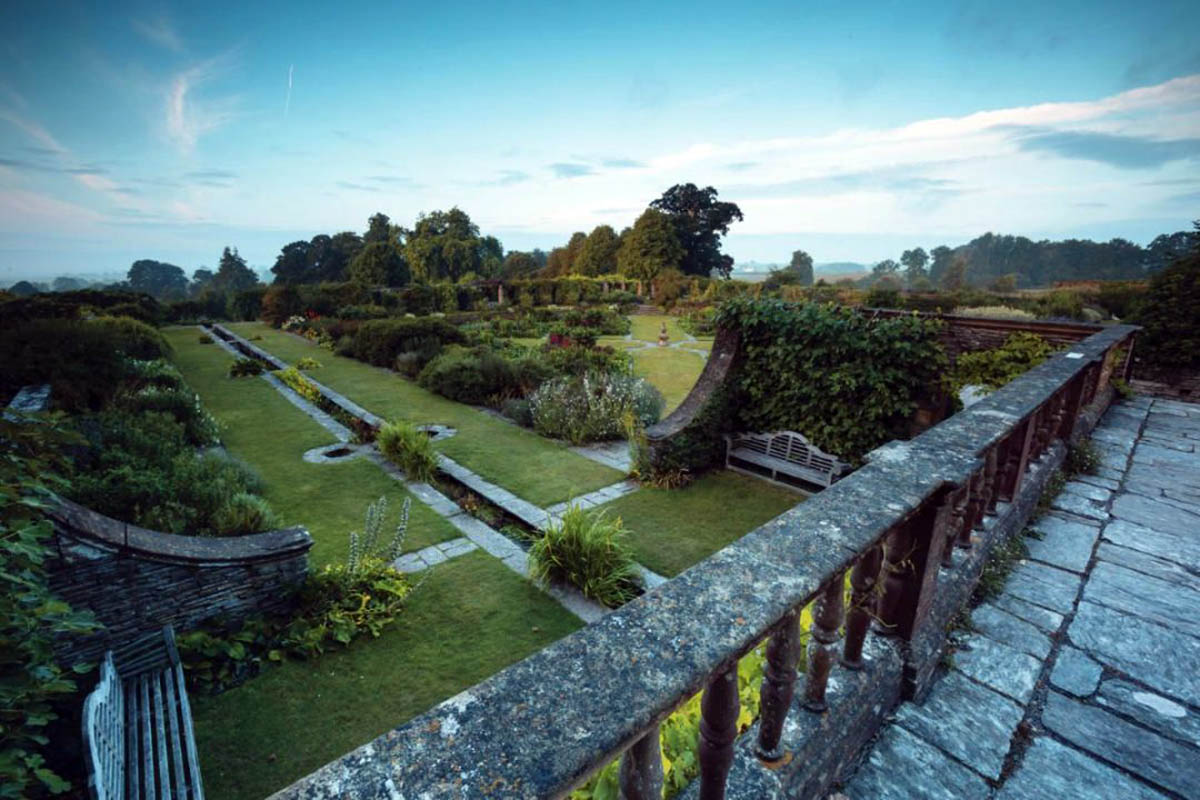
1903 年,波特曼家族第三代继承人爱德华·波特曼(E.W.B. Portman)委托当时三十出头的建筑师埃德温·卢廷斯爵士(Sir Edwin Lutyens)重新设计庄园南侧的正式花园,园艺种植则交由画家出身、视力衰退的格特鲁德·杰基尔(Gertrude Jekyll)担纲。这是两位园艺史上赫赫有名的合作者之间最早的联手项目之一,正式花园占地约 3.75 英亩,1904 至 1908 年间建成。园中包含大凉廊(Great Pergola)下的中央下沉式大广场(Great Plat)、东西两侧的窄水渠、东侧山坡上的橙屋(Orangery)和一条通往山顶的大台阶(Daisy Steps),所用的黄色石灰岩取自南萨默塞特本地的采石场。后来园艺界普遍认为,海斯特库姆的正式花园是卢廷斯与杰基尔合作作品中保存最完整的一处。
战时与战后
1944 年,波特曼家族将庄园出售给皇冠庄园(Crown Estate),但庄园主体建筑与正式花园留在了波特曼手中。1951 年,萨默塞特郡议会(Somerset County Council)购入庄园主楼与园地,主楼此后用作萨默塞特消防队(Somerset Fire and Rescue Service)的总部,1973 年起萨默塞特郡议会联合消防队开启了对正式花园的修复工程,这是 1970 年代英国最早的庄园花园修复之一。修复时,工匠在温室抽屉里意外发现了杰基尔七十年前留下的原始种植图稿,第二份副本则在加州大学伯克利分校找到,照原貌重栽的工作主要在修复早期完成,1998 年又按图稿对大广场做了一次较大规模的重新种植。1995 年起,十八世纪景观园也开始按班普菲尔德的原貌修复,疏浚湖泊清出超过一万七千吨淤泥,1997 年 4 月正式花园与景观园重新向公众开放,这是 125 年来的首次。
信托与修复
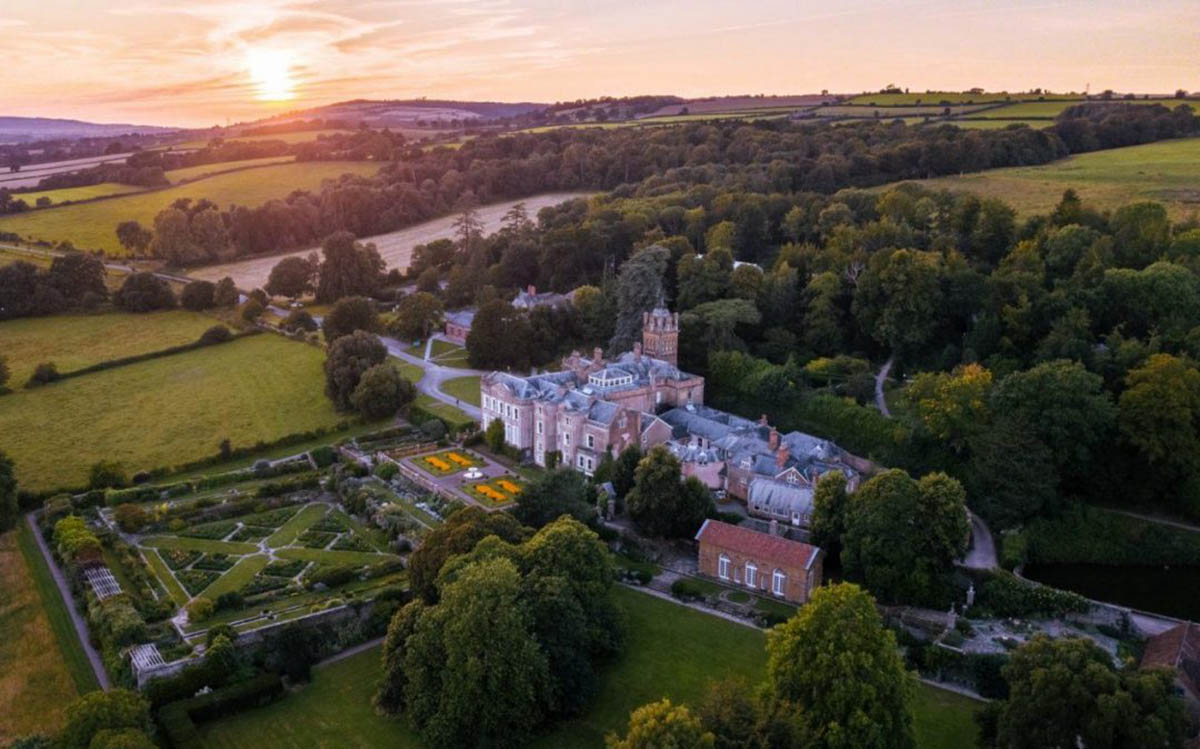
2003 年 10 月,专门负责日常管理的海斯特库姆花园信托(Hestercombe Gardens Trust)在英格兰和威尔士注册为慈善机构,登记号 1060000,同时获得国家彩票遗产基金(Heritage Lottery Fund)3.7M 英镑拨款,开启了五年期的发展与修复项目。2018 年 9 月,借助国家遗产纪念基金(National Heritage Memorial Fund)的资助,信托又购入了庄园周边共 320 英亩的土地,将这片一级登录遗产景观完整保护下来。如今访客可以在五十英亩范围内走过三个不同时期的花园:十八世纪班普菲尔德的景观园、十九世纪维多利亚台地园(建于 1873 年波特曼购入后)与二十世纪初卢廷斯与杰基尔的正式园。
参观与服务
园址位于萨默塞特郡东北郊,距离 M5 高速公路第 25 路口约十分钟车程,距汤顿镇中心也只有几英里。汤顿火车站有直达伦敦和布里斯托的列车,下车后换乘短途出租车即可抵达。园方提供完整花园地图和语音导览,访客中心免门票入内,门票分季节,园内设餐厅、礼品店,圣诞与夏季有专题活动;也可包场举办婚礼。开放时间一般为每日 10:00 至 18:00(最后入场 16:30)。
Estate history
Hestercombe Gardens sits in the Quantock Hills fringe of south-west England, about 3.5 km north of the market town of Taunton and a kilometre north of the village of Cheddon Fitzpaine, in the English county of Somerset. The site is first mentioned in an Anglo-Saxon charter of 854, and the Warre family held the estate from 1391 until 1872, almost five hundred years of continuous ownership. In 1750 Coplestone Warre Bampfylde inherited the property from his father and laid out the landscape garden in the combe to the north of the house, with lakes, cascades, a series of ornamental structures and a chain of walks; the resulting 35 acres were widely noted by later writers as one of the most complete surviving English landscape compositions of the Georgian era.
A Lutyens–Jekyll partnership
In 1903 E. W. B. Portman commissioned the young architect Edwin Lutyens to redesign the formal gardens on the south side of the house, with planting schemes supplied by the painter and embroiderer Gertrude Jekyll, who had turned to gardening as her eyesight failed. Their collaboration produced a 3.75-acre formal garden, completed between 1904 and 1908, with Lutyens’s architecture — Great Plat, east and west rills, Orangery, Daisy Steps and the long pergola with circular and square piers — and Jekyll’s bold planting in geometric beds. The garden is widely regarded as the most complete surviving partnership between the two designers; the South Somerset hamstone gives the work its warm honey colour.
Wartime and aftermath
In 1944 the Portman family sold the wider estate to the Crown Estate, retaining the house and the formal garden. Somerset County Council bought the house and grounds in 1951 and converted the house into the headquarters of the Somerset Fire and Rescue Service; from 1973 the council and the fire brigade began restoring the Edwardian formal garden, one of the first major garden restorations in Britain. While clearing the potting shed, the restorers found Jekyll’s original planting plans tucked in a drawer where they had lain for nearly seventy years, and a second copy later turned up in the Reef Point Gardens archive at the University of California, Berkeley. Restoration of the 18th-century landscape garden started in 1995; over 17,000 tons of silt were dredged from the lakes and the views reopened. In April 1997 the gardens were thrown open to the public for the first time in 125 years.
Trust and restoration
In October 2003 the Hestercombe Gardens Trust was registered as an English charity (registered charity number 1060000) and took over day-to-day management of the gardens with a Heritage Lottery Fund grant of 3.7 million pounds, kicking off a five-year development programme. In September 2018, with support from the National Heritage Memorial Fund, the trust acquired an additional 320 acres of surrounding land, securing the Grade I registered landscape for the long term. Visitors today walk through three centuries of design on one site: Bampfylde’s 18th-century landscape, the Victorian terrace and shrubbery added after the Portman purchase of 1873, and the Edwardian formal garden of Lutyens and Jekyll. The Trust also continues to restore a rare late-16th-century water garden first mapped in 1840, which adds a fourth period to the site.
Visiting and services
The estate lies about ten minutes by road from junction 25 of the M5, a few miles north of Taunton town centre, and is convenient for day trips from Bath and Exeter by rail. Taunton station is served by Great Western and CrossCountry trains and is a short taxi ride from the gardens. Visitor facilities include a plant-centred shop, the Garden Restaurant (all-day), family events and a wedding licence, with reduced entry for National Trust and Art Fund members. Gardens open daily from 10 am to 6 pm in summer (last entry 4.30 pm), and admission prices vary by season.
相关文章:
 英国 历史园林与公园档案库 Parks & Gardens UK – 英国历史园林档案平台
 苏格兰 卡罗赛德花园 Carolside Gardens – 玫瑰名园苏格兰最浪漫的花园之一
 英国 莱昂纳德利湖园 Leonardslee Lakes & Gardens – 英国一级登录历史园林
 英国 Great British Gardens – 英国最大花园导览资源门户
 英国 巴茨福德树木园 Batsford Arboretum – 英国非营利樱花国家收藏园
 英国 马伍德山花园 Marwood Hill Gardens – 国家收藏造景花园
 苏格兰荣誉花园 Glorious Gardens – 英国西部花园旅游联合体
 苏格兰 德拉姆兰里格城堡花园 Drumlanrig Castle Gardens – 苏格兰国家级造景园林遗产
发表回复