
从一个想法到全国性组织
新西兰香草联盟(Herb Federation of New Zealand,简称 HFNZ)在 1986 年 2 月完成社团注册,当时的想法很简单:把全国对香草有兴趣的人放进同一个组织里。联盟由会员选出的执行委员会管理,会员既可以是个人,也可以是地方性的香草学会或团体。目前挂在联盟名下的地方学会有 11 家,分布在奥克兰、坎特伯雷、下哈特谷、卡蒂卡蒂、卡皮蒂、马尔伯勒、南地、南怀卡托、斯特拉特福、陶朗加和怀拉拉帕;另有 5 个规模较小的非正式小组,包括哈韦拉、马纳瓦图的 Herb*Larking、豪拉基草药俱乐部、北坎特伯雷小组和旺加努伊小组。联盟章程第 2a 条写明了它要做的事:向公众普及香草的栽培与使用。2026 年是联盟成立的第 40 年,它把这段历史整理成一份公开的沿革文件放在站上。
会徽上的琉璃苣与麦卢卡
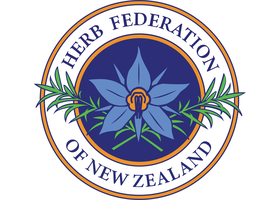
联盟的会徽由奥克兰的一位设计者绘制,图案是一朵琉璃苣花配上两侧的麦卢卡(mānuka)枝条。琉璃苣代表外来香草对新西兰的影响,麦卢卡枝条代表本地原生与特有香草这一条线索。花瓣是五片,对应联盟关注的五个方向:香草的栽培与研究、烹饪用途、药用、化妆与手工用途,以及商业化利用。这个分法也大致划出了联盟出版物和课程的取材范围。站上同时挂着一份免责声明,说明网站内容属于一般性参考,不能替代医疗建议,正在服药或接受治疗的人应当先告知医生或有资质的草药师。
十二个模块的函授证书课程
联盟自行开发了一套证书课程,名称是「香草及其用途」(Herbs and their uses),共十二个模块,以函授方式学习。课程有意保持纸面形式,不做线上提交:学员打印模块、完成后寄回批改,因为批改工作和课程运作都靠志工承担。单个模块的费用是 50 新元,个人会员为 30 新元。第一个模块从植物与环境的关系、气候变化的驱动因素、原生与归化植物的区别讲到新西兰的生物多样性策略;后面依次进入香草使用史、植物分类与拉丁双名法识别等内容。所需教材大多可在奥克兰大学的校园书店买到。联盟另设两项学习奖学金,一项由联盟自己出资,另一项由普霍伊以南一处私人香草花园赞助,覆盖十二个模块的费用,期限最长三年,申请每年 9 月 30 日截止,结果在年度大会上公布。
三月的香草认识月
每年三月是联盟定下的香草认识月。国际香草协会会选出当年的国际年度香草,联盟再另选三种,四种合起来作为当年的学习对象。联盟为每一种编写资料页,内容包括识别方法、药用与烹饪用途,以及一段实用提示,配上宣传海报,以电子文件形式发给个人会员和会员学会,地方学会据此办展览、讲座和研习活动。2026 年选出的四种是牛蒡(Arctium lappa)、夏枯草(Prunella vulgaris)、塔拉塔(Pittosporum eugenoides)和姜黄(Curcuma longa);2025 年的国际年度香草是德国洋甘菊。除资料页之外,联盟每年还评一次香草项目奖,鼓励会员或会员学会做面向公众的社区项目,可以是公共展示、工作坊、社区菜园或教材,申请在 10 月 15 日截止,进行中的项目需要每半年提交一次进度。
站上的香草档案、种子库与会刊
联盟站上目前有 72 篇单种香草档案,除了常见的迷迭香、洋甘菊、金盏花、蒲公英、姜黄之外,也收了不少新西兰本地与毛利传统用药植物,例如卡瓦卡瓦(kawakawa)、麦卢卡、卡努卡(kānuka)、霍罗皮托(horopito)、科罗米科(koromiko)、库马拉豪(kūmarahou)、皮科皮科(pikopiko)和蒂考卡(tī kōuka)。另有 24 份食谱、8 篇草药疗法文章和 6 篇按科属整理的植物笔记。种子库和参考图书馆放在会员区,需要缴费会员登录后使用;季刊《Herb News》同样如此,公开区只放了 2017 至 2020 年的四期样刊。联盟历年出版过《Sunflowers》(2001)、《Herbs in Schools》(2003)和《Gardening with Children》(2004),后者作为儿童园艺教材可自由下载,只要不用于营利。资源页还列了 16 处可以实地参观的公共香草园,从马努雷瓦的奥克兰区域植物园、汉密尔顿花园到因弗卡吉尔皇后公园的感官花园,后者由南地香草学会与当地市议会共同维护。会员权益包括两年一届的会议、季刊、模块费用三分之一的减免,以及全国香草图书馆、种子库和植物收藏的使用权。
From One Idea to a National Body
The Herb Federation of New Zealand (HFNZ) was incorporated in February 1986 with a straightforward aim: to bring everyone interested in herbs into a single organisation. It is administered by an elected executive committee, and membership is open both to individuals and to herb societies and groups. Eleven local herb societies currently sit under the federation, covering Auckland, Canterbury, Hutt Valley, Katikati, Kapiti, Marlborough, Southland, South Waikato District, Stratford, Tauranga and Wairarapa, alongside five smaller informal groups in Hawera, Manawatū, Hauraki, North Canterbury and Whanganui. Clause 2a of its constitution states the task plainly: to promote public education in the cultivation and use of herbs. The year 2026 marks four decades since incorporation, and the federation has published a written history of that period on its site.
Borage and Mānuka on the Emblem
The federation emblem, drawn by an Auckland designer, pairs a borage flower with sprigs of mānuka on either side. The borage stands for the exotic herbs brought into New Zealand, while the mānuka sprigs point to the native and endemic side of the collection. The flower has five petals, matching the five facets the federation works across: growing and research, culinary use, medicinal use, cosmetic and craft use, and commercial use. That division also maps roughly onto the range of its publications and course material. A disclaimer sits alongside the emblem notes, stating that the site is a general reference rather than medical advice, and that anyone taking medication or undergoing treatment should tell their doctor or a qualified herbalist first.
A Twelve-Module Correspondence Certificate
The federation developed its own certificate programme, “Herbs and their uses”, made up of twelve modules studied by distance learning. The course is deliberately paper-based rather than online: students print each module and post it back for marking, because the marker and the wider programme are run by volunteers. A single module costs NZ$50, or NZ$30 for individual members. Module one moves from the relationship between plants and their environment, through the drivers of climate change and the difference between native, introduced and naturalised plants, to the New Zealand biodiversity strategy; later modules cover the history of herbal use and plant classification with Latin binomials. Most set texts can be bought through the campus bookshop at the University of Auckland. Two study scholarships are also available, one funded by the federation and one by a private herb garden south of Puhoi. Each covers the fees for all twelve modules over a maximum of three years, with applications closing on 30 September and results announced at the annual general meeting.
Herb Awareness Month in March
March is set aside as Herb Awareness Month. The International Herb Association names an International Herb of the Year, and the federation selects three more, giving four herbs to study for the season. For each one it writes a data sheet covering identification, medicinal and culinary uses and a set of practical hints, issued digitally with a publicity poster to individual members and member societies, which then mount displays, seminars and lectures. The four herbs chosen for 2026 are burdock (Arctium lappa), self heal (Prunella vulgaris), tarata (Pittosporum eugenoides) and turmeric (Curcuma longa); chamomile was the international herb for 2025. Separately, an annual Herb Project Award recognises community work that puts herb knowledge in front of the public — a display, a workshop, a community garden or teaching material — led by a financial member or a member society. Applications close on 15 October, and ongoing projects report every six months.
Monographs, Seed Bank and Journal
The site carries 72 single-herb monographs. Beside familiar entries such as rosemary, chamomile, calendula, dandelion and turmeric, it covers a good number of New Zealand native and rongoā Māori plants, including kawakawa, mānuka, kānuka, horopito, koromiko, kūmarahou, pikopiko and tī kōuka. There are also 24 recipes, eight articles on herbal remedies and six notes arranged by plant family. The seed bank and reference library sit in the members area and require a financial membership to use, as does the full run of the quarterly journal Herb News; four sample issues from 2017 to 2020 are open to everyone. Earlier publications include Sunflowers (2001), Herbs in Schools (2003) and Gardening with Children (2004), the last of which may be downloaded and printed freely for non-profit use. The resources section lists sixteen public herb gardens open to visitors, from Auckland Botanic Gardens at Manurewa and Hamilton Gardens to the sensory garden at Queens Park in Invercargill, maintained jointly by the Southland Herb Society and the city council. Membership benefits include a biennial conference, the quarterly journal, a third off each certificate module, and access to the national herb library, seed bank and plant collections.
相关文章:
 New Zealand Rose Society (NZRS) – Founded 1931, the Oldest National Rose Society in Oceania
 新西兰盆景协会 NZBA – 每年组织举办新西兰全国盆景大会
 新西兰山茶花协会 – 新西兰山茶花栽培与评展公益团体
 美国 威斯康星州麦迪逊香草协会 Madison Herb Society 威斯康星州香草爱好者组织 – 行业自律与服务组织
 新西兰 花园信托基金 NZGT – 开展全国花园评级与认证体系
 加拿大 RICHTERS香草苗圃 – 加拿大跨地理香草资讯平台
 新西兰 奥克兰植物园 Auckland Botanic Gardens – 具有独特南太平洋风味的壮观花园
 美国 香草协会 The Herb Society of America – 1933 年创立的香草研究非营利组织
发表回复