
一个从 1996 年开始的念头
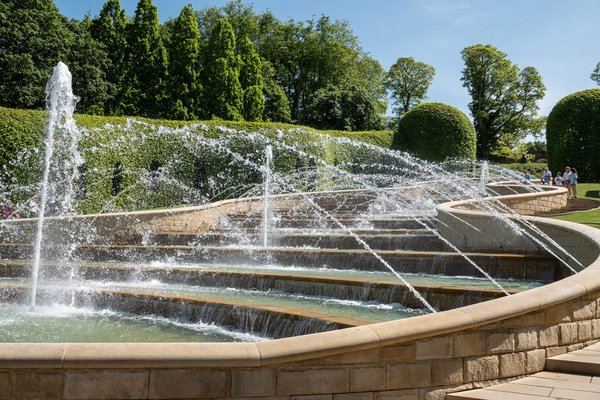
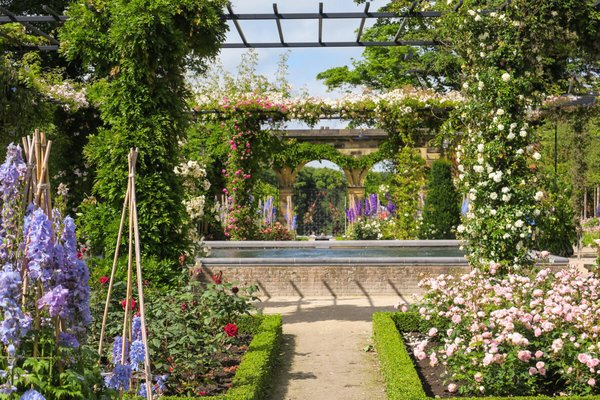
阿尼克花园在诺森伯兰郡阿尼克城堡旁边,那片地原属公爵家。1996 年,诺森伯兰公爵夫人决定建一座新花园,1997 到 1998 年请沃茨国际事务所来解读她的构想。2000 年动工,2001 年第一期开放,先有中央大瀑布、玫瑰园、装饰园和丛林小径。
2003 年,诺森伯兰花园信托正式成立,成为独立慈善机构,同年二期开工。2005 年二期开放,多出树屋、毒药园、竹迷宫和蛇形园;2006 年,由迈克尔·霍普金斯爵士设计的展亭和游客中心开门。2011 年园里辟出「根与芽」花园,2015 年玫瑰园装上斯黛芬·伦恩设计的公爵夫人门,2016 年设了一间面向长者的活动室,2017 年开放遗忘花园探险高尔夫,2018 年樱园里添了 50 张秋千。2023 年,园子里的冬季主题乐园 Lilidorei 开门,园方说那里住着 9 个隐形族群,一年里 11 个月都在为圣诞节做准备。
园方如今说全园有 67 英亩;英文维基百科上记的是当年公爵捐出的 42 英亩地块。园子对外售票,同时是一家慈善机构,用门票收入和捐款做教育、康养和社区项目。2022 年它拿到年度大型旅游景点金奖,2024 年又获无障碍与包容旅游奖,在旅游点评网站还进了五年名人堂。
世界最大的一片大滨樱
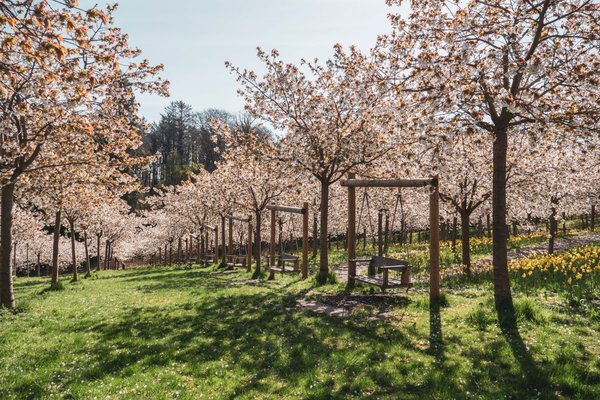
樱园 2008 年开放,沿革页记的是当年种下 326 株大滨樱,樱花园自己的页面现在写全园共 329 株。大滨樱又叫「大白」,花朵大而密,一年只开两周,四月底到五月初一起开,秋天叶子转成铜红色。
这批树的来历很绕。1926 年,科林伍德·英格拉姆上校(小名「樱桃」英格拉姆)应邀去日本向樱花协会讲学,主人翻出一本 18 世纪书里的大白樱花插图,认定这个品种早已绝迹。他后来在萨塞克斯一座花园里认出同样的花——那株树是 1899 年从日本引进的——于是取了插条,1932 年把大白樱花重新带回日本。今天世界各地栽培的大滨樱,都是那株萨塞克斯树的子孙。
园方说 329 株树都有游客和支持者认捐,每年办一次私人献树仪式;2018 年又添了 50 张秋千。园里还卖一款用这片樱园取名的樱桃金酒。
铁门后面的毒药园
毒药园是园里最出名也最讲规矩的一角。它用黑色铁门围起来,只在导览时段开放,门上写着「这些植物能致命」,旁边画着骷髅交叉骨。里面约有一百种有毒、致醉和致幻的植物,包括金链花、颠茄、铁筷子、乌头、蓖麻、大猪毛菜和罂粟。
规矩很硬:不许闻、不许摸、不许尝,讲解员带着游客走一圈,讲毒物的来历,也讲毒品的药理知识。参观要另买导览票,每人加 1 英镑,还得有花园门票,位置得提前订好。园里的礼品店和网店还做了一条「毒药园」产品线,有一本从 A 到 Z 的毒物图鉴,也有杜松子金酒和伏特加。
这块地在 2005 年随二期一起开放,比花园本身晚了四年。
树屋、竹迷宫和蛇形园
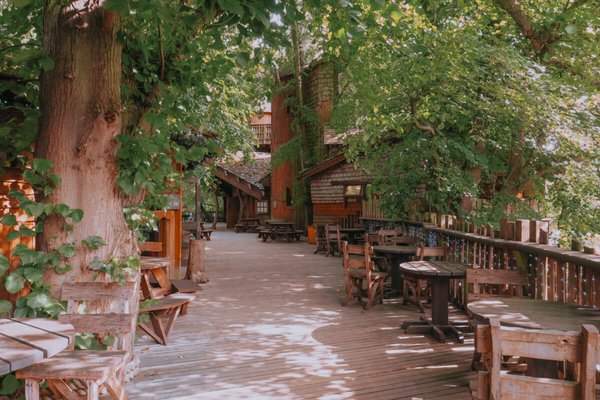
树屋在园子围墙外面,是园方所说的世界最大木制树屋,围着 16 棵成年椴树建起来,树从屋体里穿出去继续长。2005 年它拿了《纽卡斯尔日报》的地标零售与休闲奖,2007 年又得到地方政府建筑控制部门颁发的无障碍通道创新奖。树屋餐厅就设在树冠之间,离地 18 米。
竹迷宫种着 500 多株竹子,园方写明是 Fargesia rufa,一种中国竹。迷宫由阿德里安·费舍尔设计,他是国际上最有名的迷宫设计者之一,竹子弯成拱顶,盖住那些弯来绕去的小路。
蛇形园里立着八组水景雕塑,嵌在一条修剪成蛇形的绿篱盘绕之间,雕塑出自威廉·派,站方介绍他是世界最著名的水景雕塑家之一;蛇身用冬青种成,每组雕塑安放在自己那一段蛇身上。
玫瑰园、装饰园和园里的其他去处
玫瑰园从 2001 年起由 David Austin 玫瑰公司赞助。2026 年园子做了一轮翻新:一月里先挖掉 600 毫米旧土,把 300 株原有玫瑰起出来挪开,三月二十三日重新种下大约 400 株新的 David Austin 玫瑰,园方说赶在 25 周年之前让它们开起来。
装饰园从 16 世纪的威尼斯门进去,园方说种着一万六千多株欧洲植物,分成一间间由绿篱和乔木围出的「房间」,中央是一方浅池。园里几样常见的植物:树皮发白的桦树,落叶后枝干仍是白的;金缕梅在光秃的枝上开橙红色花;十大功劳抽出一串串黄花;荚蒾冬天挂着粉红色花苞。
园子还有几处去处:礼品店和植物中心不用买门票就能进,植物中心卖 100 多种 David Austin 香气玫瑰,其中包括专为这座园子培育、在 2001 年切尔西花展上发布的「阿尼克玫瑰」,园子自己的苗圃用种子或扦插繁殖这些植株。会员卡一年不限次入园,园方另提供学校会员和团体参观的安排。2026 年 11 月起开放时间做了调整,冬季白天多在周四到周日 10 点到 15 点开放,圣诞前有夜场,圣诞节当天闭园。
An Idea That Started in 1996
The Alnwick Garden sits beside Alnwick Castle in Northumberland, on land that once belonged to the Dukes of Northumberland. In 1996 the Duchess of Northumberland decided to build a new garden, and between 1997 and 1998 she commissioned Wirtz International to interpret her vision. Construction began in 2000, and phase one opened in 2001 with the Grand Cascade, the Rose Garden, the Ornamental Garden and a woodland walk.
In 2003 the Alnwick Garden Trust was formalised as an independent charity, and work on phase two started the same year. Phase two opened in 2005, adding the Treehouse, the Poison Garden, the Bamboo Labyrinth and the Serpent Garden; in 2006 the Pavilion and Visitor Centre, designed by Sir Michael Hopkins, opened to the public. A Roots and Shoots garden followed in 2011, Stephen Lunn’s Duchess’s Gates went into the Rose Garden in 2015, a room for older visitors opened in 2016, the Forgotten Garden adventure golf opened in 2017 and fifty swings went up in the Cherry Orchard in 2018. In 2023 the winter attraction Lilidorei opened, home according to the garden to nine invisible clans that spend eleven months of the year preparing for Christmas.
The garden now describes its site as 67 acres; English Wikipedia records the 42-acre plot the Duke donated. It sells tickets and is also a charity, using ticket income, donations, grants and activities to fund education, wellbeing and community work. It took a Gold award for Large Visitor Attraction of the Year in 2022, an Accessible and Inclusive Tourism award in 2024, and a five-year place in the TripAdvisor Hall of Fame.
The World’s Largest Patch of Taihaku
The Cherry Orchard opened in 2008. The history page records 326 Taihaku cherry trees planted that year, while the orchard page now gives 329 for the whole collection. Also known as the Great White, Taihaku carry large, dense flowers that open together for about two weeks in late April and early May, and the leaves turn coppery red in autumn.
The trees have a roundabout history. In 1926 Captain Collingwood Ingram, known as Cherry Ingram, was invited to Japan to lecture to the Sakurakai, and was shown a picture of a large white cherry blossom in an eighteenth-century book, by then thought extinct. He later recognised the same blossom on a cherry imported to a Sussex garden in 1899, took cuttings, and reintroduced the lost Taihaku to Japan in 1932. Every Taihaku in cultivation today descends from that Sussex tree.
According to the garden, all 329 trees are sponsored by visitors and supporters, with a private dedication ceremony each year; fifty more swings were added in 2018. The garden also sells a cherry blossom gin named after the orchard.
The Poison Garden Behind the Iron Gate
The Poison Garden is the best-known part of the site and the one with the strictest rules. It is enclosed by black iron gates and open only on guided tours, with a sign reading These plants can kill and a skull and crossbones beside it. It holds around a hundred toxic, intoxicating and narcotic plants, among them laburnum, deadly nightshade, hellebore, monkshood, castor oil plant, giant hogweed and opium poppy.
The rules are firm: no smelling, no touching, no tasting. Guides lead visitors around and talk about where poisons come from and how they work. A tour ticket costs an extra pound per person on top of a garden ticket, and places have to be booked in advance. The gift shop and online store also run a Poison Garden range, including an A-to-Z book of poisonous plants, a gin and a vodka.
It opened in 2005 with phase two, four years after the garden itself.
Treehouse, Bamboo Labyrinth and Serpent Garden
The Treehouse stands just outside the garden’s perimeter wall and is described by the garden as the largest wooden treehouse in the world, built around 16 mature lime trees that grow through and into the building. It won the Newcastle Journal Landmark Retail and Leisure Award in 2005 and a Local Authority Building Control award in 2007 for innovatory disability access. The Treehouse Restaurant sits up in the lime trees, 18 metres above the ground.
The Bamboo Labyrinth is planted with over 500 bamboo of the Chinese variety Fargesia rufa. It was designed by Adrian Fisher, one of the world’s leading maze-makers, with the bamboo arching overhead to cover the twisting paths.
In the Serpent Garden, eight water sculptures nestle in the coils of a topiary serpent, the work of William Pye, one of the world’s leading water sculptors. The serpent itself is formed from holly, and each sculpture sits within its own coil.
Rose Garden, Ornamental Garden and Where Else to Go
The Rose Garden has been sponsored by David Austin Roses since 2001. In 2026 the garden carried out a renewal: 600mm of old soil came off in January, 300 existing rose plants were carefully lifted to make way for the new display, and around 400 new David Austin roses went in on 23 March, in the hope that they bloom in time for the garden’s 25th anniversary.
The Ornamental Garden is entered through sixteenth-century Venetian Gates and holds over sixteen thousand European plants, arranged as a series of rooms framed by shrubs and trees around a shallow pool. Among the plants to look for are a birch with an unusually white stem, witch hazel flowering orange-red on bare branches, mahonia with yellow shuttlecock flowers, and viburnum carrying pink buds in winter.
There is more to see: the gift shop and plant centre can be visited without a garden ticket, and the plant centre sells over 100 varieties of scented David Austin Roses, including the Alnwick Rose, bred for the garden and unveiled at the Chelsea Flower Show in 2001, with a note of raspberry in its scent. The garden’s own nursery propagates these plants from seed or cuttings. Membership gives unlimited access for 12 months, and the garden also offers school memberships and group bookings. Opening hours were adjusted from November 2026, with winter daytime opening usually Thursday to Sunday, 10am to 3pm, evening sessions before Christmas, and the garden closed on Christmas Day.
相关文章:
 英国 C&K Jones玫瑰苗圃 – 种苗生产与销售
 英国 戴维奥斯汀月季 – 当今世界最具影响力的英伦玫瑰育种品牌之一
 美国 Kubota花园 Kubota Garden – 西雅图 20 英亩日式园林
 英国 花园屋 The Garden House – 教会花园与雪滴花收藏地
 英国 摩尔草甸花园 Moors Meadow Garden – 英国国家花园计划合作花园
 美国 俄勒冈花园 Oregon Garden – 展示威拉米特河谷及整个太平洋西北地区多样化的植物生态
 英国 玫瑰英国 Roses UK – 英国玫瑰育种协会独家资助的推广项目
 英国 达维克植物园 Dawyck Botanic Garden – 英国皇家爱丁堡植物园旗下五星树木园
发表回复