
从一册打字机目录起步的种子公司
Magic Garden Seeds 是德国雷根斯堡的种子公司,创办人 Andreas Poszar 和 Harald Schreiner。1997 年两人还在卡塞尔念书时创办,起步的方式很特别:Poszar 当时受训做自然疗法医师,整日泡在稀有药草和药用植物里,后来他用打字机敲出了一本小目录,让顾客贴上邮资信封来订购,售的是特殊药用植物和特别的老蔬菜品种。
Schreiner 后来接手经营,公司 2007 年迁到雷根斯堡,2015 年两人把长期合作正式整合成一家有限责任公司,就是现在的 Magic Garden Seeds GmbH。同一年的还有两件事:公司拿到欧盟有机认证,自有设计、自有包装和自有品牌也摆上了台面,灌装等工序全部留在德国境内完成。
公司现址在巴伐利亚州雷根斯堡,是一家有限责任公司,Schreiner 任执行董事。创办人 Poszar 至今仍参与其中,他的拿手活是把稀有品种引进来——比如他当年从多瑙河畔多瑙施陶夫一座城堡废墟上采到第一批曼陀罗种子,随后自己繁殖至今。
只卖能留种的种子
这家公司最鲜明的立场是拒绝杂交品种。全店只提供 samenfest 的固定品种,也就是自然形成、没有经过杂交育种的可留种种子,不做杂交种,不卖取得专利的种子,也不碰基因改造。理由店上写得很直白:这样的种子收下来还能年年再播,种群才能一代代传下去,物种多样性才守得住。
供应网络是按这个逻辑搭的。公司和各国育种者与采集者建立了长期合作,年年包下对方的收成,从亚马孙到西西里、从法国到印度、从美国到上普法尔茨。Poszar 早年从亚马孙地区一位萨满那里拿到过第一批ayahuasca 藤的种子,与西西里的曼陀罗采集者的往来也保持到今天。Schreiner的说法是:这店里可不只是葱头。
一千三百多个品种,分门别类
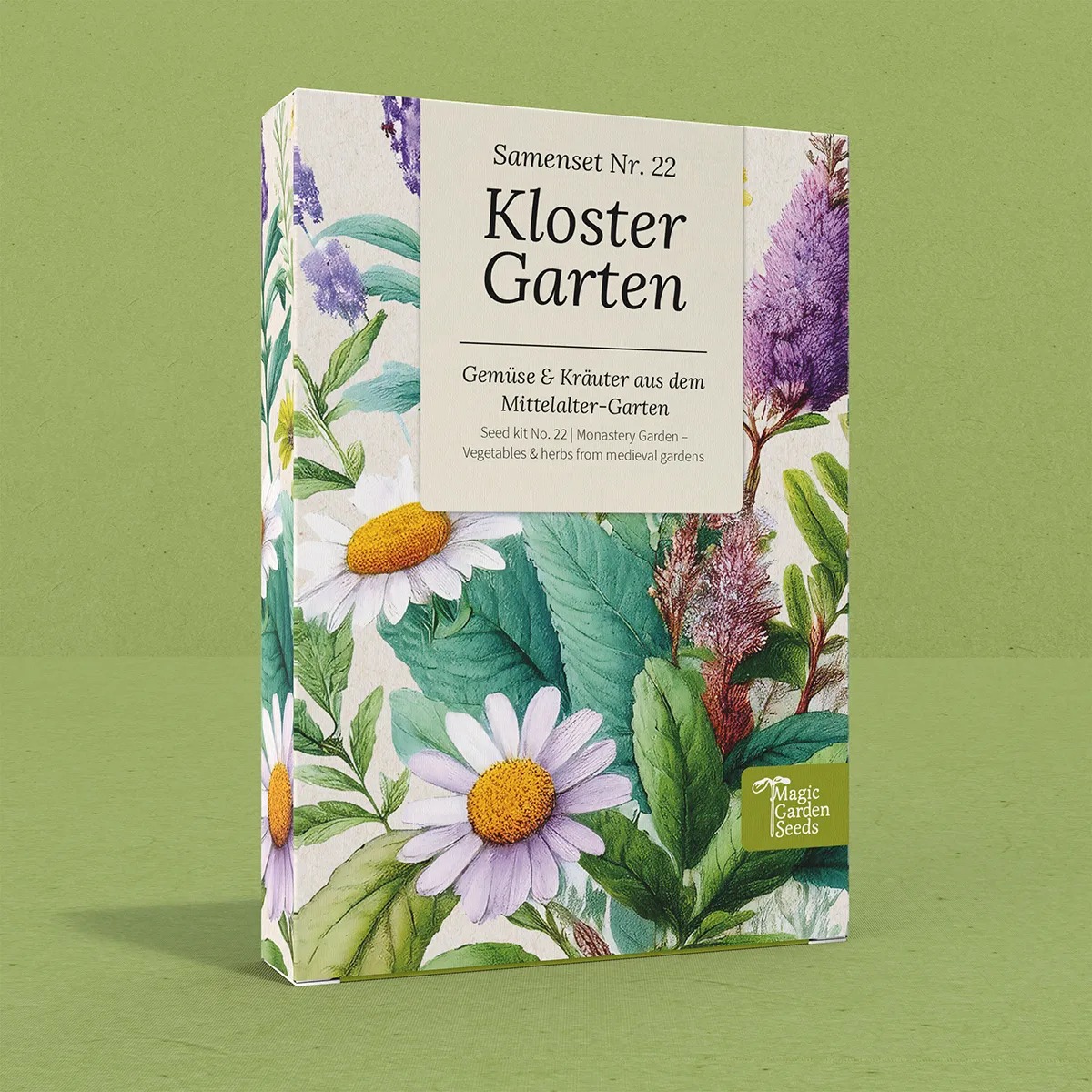
店里现有 1300 多个品种,2026 年又添了 22 个新品。目录页分门别类:蔬菜、香草、花卉、果树与坚果、乔木与灌木、民族植物学、外来植物,此外还按题材分了十来条线,从适合新手的到药用、食欲的、稀有的、好玩的。店上自己也说,最看重的还是老蔬菜品种、所谓的魔法植物和花。
老品种这条线是拳头。Pinterest 上的店铺简介写得很清楚:1300 个植物品种、25 年、传家宝种子,这三项是它的自我定位。IG 账号的简介则说”超过 1000 个品种”。数字上略有出入,源头是同一个:目录页按字母排下来共 52 页,每页 24 件,最后一页剩 7 件,合计 1231 个链接,而店上自己对外的说法是”超过 1300 个”——大概率是按品类页加赠品和套装算的。
价格区间可以参考:单包种子多数在 2.39 到 4.79 欧元之间,常见的是 2.59 欧元一包,运费另计。满 30 欧元免运费,欧盟以外寄往挪威和瑞士要 5 欧元。
自己分装、自己设计包装
公司不只是转卖商。店上在面向零售商的说明里写明,他们是自己产品的生产方,种子全部在雷根斯堡的自家作坊里灌装,包装袋由自有设计部门从构思一路做到成品,只在印刷和包装工序上找合作方。灌装这件事现在仍是手工为主,每年圣诞月历里的 24 个小袋都靠手工装。
袋子的图案出自插画师 Sina Simbürger。包装用的是回收材料,目标是尽量少用塑料。店上的说法是,选料和发芽测试做完之后才设计袋子,每一批都做批次管理,种子的发芽能力持续检测,而不是等顾客收到货才发现问题。
基于这种做法,公司也接受同行订货:散装种子按公斤起订,面向园艺企业、种子经销商、机构、植物园和化妆品与制药行业的企业,货源取自有名有姓的育种者,品质稳定;个人提出的批发询价不回复,需要提供营业执照。店里还备有面向零售商的专门批发平台。
不只是种子,还有礼盒和知识
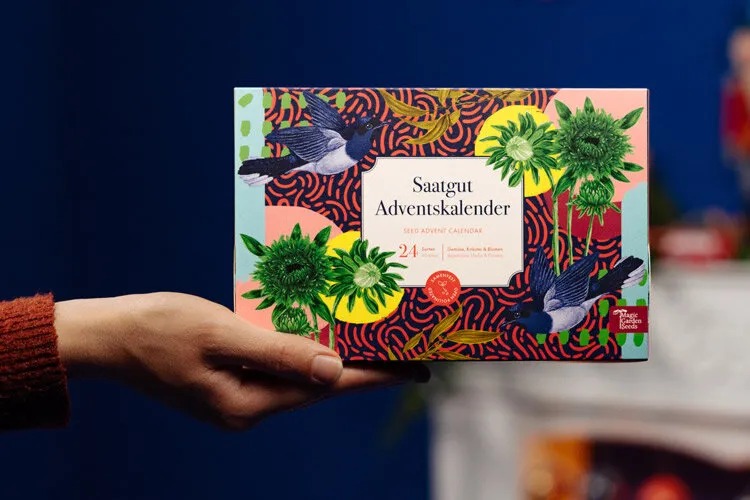
产品线里有一块是种子之外的:面向园丁的礼物套装,包括圣诞倒数日历。最新一册是”Magische Zeit”,盒面画着深蓝底色、橙红波纹和两只飞鸟,内含 24 个手工分装的小袋,售价 29.96 欧元。另有适合新手的入门套装、儿童套装、适合城市阳台种植的组合,还有旧蔬菜品种、厨房香草、烟草与猫草、佩奥特与魔法植物这类主题盒。
店上还有一整套自建的知识内容:植物百科、播种日历、播种帮助、种子知识专栏,以及一个叫”花园低语”的博客。种子知识专栏讲得比较具体——种子不发芽通常只有两个原因,太旧,或者播种条件不对;还解释了小袋上的各项标注怎么读、种子能存多久、怎么自己做发芽测试、传家宝种和杂交种的区别。
公司还专门在自家园子里做试验,把品种试过一遍再上货架;博客和社媒上能看到采种、护养和各类植物的记录,店里也提供月度订阅,把播种建议、植物知识和新品种讲一遍。
A seed company that began with a typed catalogue
Magic Garden Seeds is a seed company in Regensburg, Germany, founded by Andreas Poszar and Harald Schreiner. The two started it in Kassel in 1997 while they were still students, and the way they began was unusual: Poszar was training as a natural healer and spent his time among rare herbs and medicinal plants, and he later typed out a small catalogue by hand, taking orders by post with a stamp on the envelope. What he sold were special medicinal plants and particular old vegetable varieties.
Schreiner took over running the business. The company moved to Regensburg in 2007, and in 2015 the two turned their long collaboration into a limited liability company, Magic Garden Seeds GmbH. Two other things happened that year: the company was certified organic, and its own design, its own packaging and its own brand came to the fore, with the work and the bottling of the seed all kept in Germany.
The company is based in Regensburg in Bavaria and is a limited liability company with Schreiner as managing director. Founder Poszar is still involved, and bringing in rare varieties remains his speciality: he gathered the first henbane seed for the range himself at the castle ruin at Donaustauf, then multiplied it on from there.
Seed that can be saved and sown again
The most distinct thing about this company is that it refuses hybrid seed. Everything it sells is samenfest, that is, fixed varieties that arose naturally and have not been crossed, and there is no hybrid seed, no patented seed and no genetically modified seed. The reasoning on the site is plain: seed like that can be harvested and sown again year on year, so populations carry on from generation to generation and variety diversity has a chance of surviving.
The supply network was built around that idea. The company works with breeders and collectors in many countries and takes their crop year after year, from the Amazon to Sicily, from France to India, from the United States to the Upper Palatinate. Poszar got his first ayahuasca vine seed from a shaman in the Amazon region, and the contact with a henbane gatherer in Sicily is one he still keeps. As Schreiner puts it, there is more to this shop than chives.
Over thirteen hundred varieties, sorted into categories
The range runs to more than 1300 varieties, with 22 new ones added for 2026. The catalogue is sorted into vegetables, herbs, flowers, fruit and nuts, trees and shrubs, ethnobotanical plants and exotic plants, and then into a dozen themed lines that run from beginner-friendly to medicinal, edible, rare and curious. The old vegetable varieties are what the company says it cares about most, along with what it calls the magic plants and the flowers.
Old varieties are the strong suit. The shop’s own Pinterest description puts it plainly: 1300 plant varieties, 25 years, heirloom seed. The Instagram profile says “over 1000 varieties”. The two figures differ slightly because they come from the same source: the catalogue runs to 52 pages at 24 items a page with 7 left on the last, which comes to 1231 links, while the shop describes the range to the public as “over 1300”, most likely counting the category pages, gifts and sets as well.
As a guide to prices, single packs mostly sit between 2.39 and 4.79 euro, with 2.59 euro a common figure, shipping extra. Delivery is free above 30 euro, and postage to Norway and Switzerland outside the EU is 5 euro.
Filling and packing their own seed
This is not a reseller. The page aimed at trade customers states that the company produces all of its own products, that the seed is filled into the bags in its own workshop in Regensburg, and that the packaging is taken from the idea through to the finished pack by their own design department, with selected partners helping on the printing and the packing. Filling is still largely done by hand, and the 24 small bags in the Advent calendar are filled by hand each year.
The bag artwork is by the illustrator Sina Simbürger. The packaging uses recycled material, with the aim of using as little plastic as possible. The site explains that the bag is designed only after selection and the germination test, that every batch is tracked, and that germination capacity is tested continuously rather than left for the customer to find out after the seed arrives.
Because of this they also supply other traders: loose seed by the kilogram to nurseries, seed dealers, institutions, botanical gardens and companies in the cosmetics and pharmaceutical industries, with goods bought from named breeders so quality stays steady. Wholesale enquiries from private individuals are not answered and proof of trade is required. There is a separate trade platform for retailers as well.
More than seed: gift sets and know-how
Part of the range sits outside the seed itself: gifts for gardeners, including a seed Advent calendar. The latest is “Magische Zeit”, a box painted with wavy orange-red stripes on dark blue and two birds in flight, holding 24 hand-filled bags, priced at 29.96 euro. There are starter sets, a children’s set, combinations for small city balconies, and themed boxes for old vegetable varieties, kitchen herbs, tobacco and cat grass, and peyote and magic plants.
The shop also keeps a set of knowledge pages of its own: a plant encyclopaedia, a sowing calendar, sowing help, a seed knowledge section, and a blog called Gartengeflüster. The seed knowledge pages are specific: seed that fails to germinate usually has only two causes, being too old or being sown under the wrong conditions; they also explain how to read the details on a packet, how long seed keeps, how to run your own germination test, and what the difference is between heirloom and hybrid seed.
The company also runs its own trial garden and puts varieties through it before they go on sale, and the blog and social accounts carry records of seed collecting, plant care and all manner of plants. There is a monthly newsletter as well, covering sowing tips, plant knowledge, new varieties and stories from the garden.
相关文章:
 英国 Chiltern Seeds 种子公司 – 牛津郡家族花卉蔬菜种子目录商
 美国 Select Seeds 花卉种子公司 – 切花与花境花卉与香草种子公司
 美国 Select Seeds 花卉种子公司 – 古董花卉与切花品种精选商
 美国 ED HUME 种子公司 (Hume Seeds) – 1977 年创立的家族种子零售与西北冷凉气候选种专家
 加拿大 西海岸种子 West Coast Seeds – 加拿大有机种子品牌
 美国 Harris 种子公司 Harris Seeds – 蔬菜花卉种子供应商
 德国 阿斯克勒庇俄斯种子商店 Asklepios Seeds – 六百余种珍稀种子电商
 美国 凤蝶园艺种子Swallowtail Garden Seeds – 是一家美国专业花卉、蔬菜和草本植物种子在线零售商,成立于1998年,总部位于美国
发表回复