

从草莓地到牡丹田
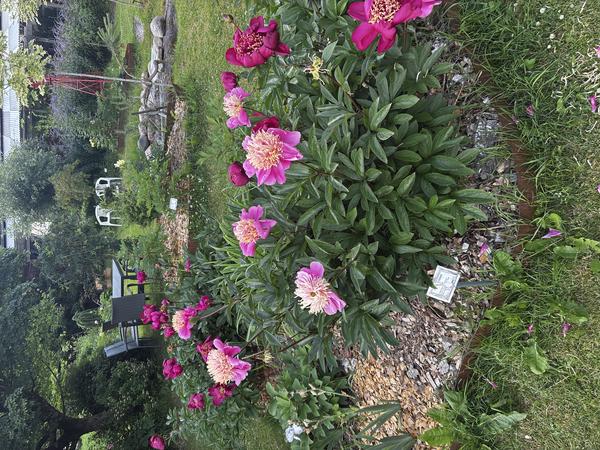
古尔兹梅德高登苗圃的创办人是赫尔曼·克鲁普克,生于 1930 年,2020 年去世。他生在德国,青年时到了瑞典,后来与妻子克里斯蒂娜相识;1958 年两人在克里斯蒂娜母亲位于瑞典南部的农场上安家。最初的田里种的是草莓,客人自己下地采摘,产量大半卖给前来聚会的人家。地力后来疲了,蚜虫和杂草也起来,他就改做玫瑰、观赏灌木、篱笆苗和多年生植物,牡丹是在这些年里慢慢加进来的,1970 年代开始栽培,如今已是苗圃最大的一项产品。克里斯蒂娜 1933 年出生,2014 年去世;苗圃现在由儿子比约恩打理,从 2002 年起。苗圃坐落在瑞典南部的西约特兰,海拔约二百米,站上标的是第四到第五抗寒分区;瑞典电台的一篇报道则把到访的最好时间放在牡丹在田里开放的六月中旬到七月中旬。
牡丹的分组与自育苗
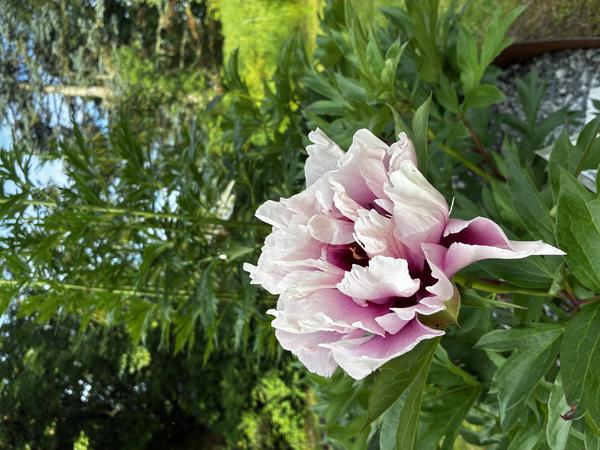
目录把牡丹分成几组:野生种、草本杂交种、黄牡丹杂交种、木本牡丹、草本牡丹、伊藤杂交种、自家育成的杂交种、自家育成的草本牡丹和盆栽。野生种最先开,在西约特兰一般五月二十日前后见花,暖春里能提前到五月五日至十日;杂交种由两个、有时三个或更多野生种杂交而来,最早一批五月底开,个别晚的可拖到仲夏;木本牡丹从六月初开到仲夏,野生种先开,黄牡丹杂交种后开,还能再开到九月和十月。四倍杂交种是四个野生种交配而成,叶子和根比草本牡丹更粗壮,花多为单瓣,颜色有白、黄、粉和香槟色,站上给这批苗编的号从七十排到九十,香槟色的黄、粉色四倍杂交种眼下暂停繁殖。瑞典电台的一篇报道引述一本新出的瑞典苗圃专书说,园里的牡丹约三百五十个品种,其中约一百五十个在苗圃或邮购渠道里出售;站点的商品地图目前列着七十余个牡丹商品页。标着「自家育成」的是自育品种。
目录里的其他品类
牡丹之外,店里还有多年生植物,分成玉簪、鸢尾、萱草、啤酒花、薄荷、可食植物和其他多年生几类;杂货一侧是书籍、土壤改良剂、皂与香氛、栽培用具、竹子、工具、灌溉设备、装饰石、肥料和花盆。页面写着可以直接买到别家种植者和自家种的常见与不常见植物。机器也能租,一台电动的立式割草除苔机标一百五十克朗。网购这一块用的是瑞典本地的网店平台,付款可以选现金发票,也可以选当地常用的即时转账。
花期表、当季开花与开放时间
站上有一张花期表,把每一类牡丹的开放时间和抗寒分区标出来,也解释了目录里那些缩写:早、中、晚三个花期各有标记,花型则分单瓣、日本式、重瓣、半重瓣和满瓣五种,同一组里按花期和花型排在一起,看表就能大致算出自家园子什么时候有花、能不能越冬。当季还有一页「当前开花情况」,每周配一张照片写一段当天实况,从花蕾到盛开逐个报名字;六月的笔记里写着按老习惯采牡丹插到仲夏柱上,还有切花栽培的进展,以及日落时分苗圃的样子。开门时间按季节排:五月下旬到六月二十一日之间每周开门两三天,周二傍晚、周五下午和周六白天;六月二十二日至二十八日是牡丹周,周一到周五从早上十点开到下午六点,周六到四点,周日照常开门;六月底到七月上旬、八月下旬到十月上旬各有固定的开放日。闭园的日子有六月初的一个周二、六月十九到二十日的仲夏周末和九月二十五日,订单发货在十月十五日之后仍会继续。
讲座、导览与发货规则
除了卖苗,苗圃还接讲解和参观的活。图像讲座加问答大约两个到三个小时,讲的人会带植物和书来现场卖,通常排在三月到四月中旬、十月月中旬到十一月中旬。导览团安排在六月一日到七月十日,走一圈四十分钟,起步价每组七十五克朗,每人四十五克朗,包车七百九十克朗,上限也是七百九十克朗。来玩一趟至少留两三个小时,工作人员提醒穿好走的鞋、带把伞。团体得提前报,说清楚日期、到场时间、联系人和大致人数,还有要不要讲解;大团要在关门前两个半小时到。网购这一侧由瑞典邮政发货,牡丹主要在九月到十一月出货,碰上寒冷的年头苗圃会代为越冬,来年春天再寄;发货件按能扛至少两周邮局运输来打包。瑞典境内订单满两千克朗免运费,满三千克朗还免收代收手续费;一千五百克朗以下可以开票,另加十五克朗手续费。牡丹苗一般是分株苗,带三到五个生长芽,早挖的晚花品种芽可能还没长成,杂交种有时只有一到两个。活体植物不适用十四天退货期,其余商品适用;寄往欧盟以外的国家另加转账费和运费,不在欧盟境内还要交一千四百克朗的出口管制费和五百克朗的证书费。包裹在邮局最多存十四天,超期未取按运费加收五十克朗,活体植物还要再补货值的一半。
From a strawberry field to a peony nursery
The nursery was founded by Hermann Krupke, who lived from 1930 to 2020. He was born in Germany and settled in Sweden as a young man, where he met Christina; in 1958 the two of them made a home on her mother’s farm in southern Sweden. The fields were given over to strawberries at first, with customers picking their own and the crop sold on to groups and parties. As the soil tired and aphids and weeds took hold, the nursery turned to roses, ornamental shrubs, hedging plants and perennials; peonies came in over the following decades and have been grown since the 1970s, and they are now the largest single product. Christina, born 1933 and died 2014, and their son Björn has run the nursery since 2002. It stands in Västergötland in southern Sweden at about 200 metres above sea level, and the site lists it under hardiness zones four and five; the nursery says the best time to visit is when the peonies are in flower in the fields, from mid-June to mid-July.
How the peonies are grouped
The catalogue splits peonies into groups: wild species, herbaceous hybrids, yellow tree peony hybrids, tree peonies, herbaceous peonies, Itoh hybrids, the nursery’s own selections and pot-grown plants. Wild species open first, around 20 May in Västergötland and as early as 5 to 10 May in recent early springs. Hybrids come from two, sometimes three or more wild species; the earliest open at the end of May and a few late ones carry on into midsummer. Tree peonies flower from early June to midsummer, wild species first and the yellow hybrids later, and they can flower again in September and October. Quad hybrids are crosses between four wild species, with leaves and roots bigger and coarser than those of herbaceous peonies and mostly single flowers in white, yellow, pink and champagne; the site lists them under numbers running from seventy to ninety, and the champagne-coloured yellow and pink ones are temporarily out of production. A feature on Swedish public radio, citing a new Swedish book about nurseries, puts the collection at around 350 peony varieties, of which some 150 are sold in the nursery or by mail order; the site’s own catalogue currently lists more than seventy peony product pages. Anything marked as the nursery’s own is a self-raised selection.
The rest of the catalogue
Beyond peonies the shop carries perennials, split into hostas, irises, daylilies, hops, mints, edibles and other perennials; on the sundries side there are books, soil improvers, soap and scent, growing supplies, bamboo, tools, irrigation equipment, decorative stone, fertiliser and pots. The pages say you can buy directly from other growers and from the nursery’s own cultivation, common and unusual plants alike. Machinery can be hired too, with an electric vertical scarifier and moss remover at 150 kronor. The online shop runs on the Swedish Quickbutik platform, and payment can be made by cash invoice or by Swish, the instant payment service used across Sweden.
Flowering chart, season reports and opening hours
The site keeps a flowering chart that sets out when each group comes into flower and which hardiness zones it tolerates, and it explains the abbreviations used in the catalogue: three letters for early, medium and late flowering, and five for the flower forms, single, Japanese, double, semi-double and fully double, with early, medium and late sorts listed side by side inside each group. The chart makes it possible to work out roughly when a garden will have flowers and whether a variety will overwinter. A second page tracks the season as it happens, pairing a photograph with a note about the day’s flowering and naming the cultivars as they open from bud to full bloom; the June entries also mention the old custom of picking peonies for the midsummer pole, how the cut flower crop is coming along, and the sunset over the nursery. Opening times run by season: between late May and 21 June the nursery opens two or three days a week, on Tuesday evenings, Friday afternoons and Saturday daytime; 22 to 28 June is peony week, open from ten in the morning until six in the evening Monday to Friday, until four on Saturday and as usual on Sunday; late June to early July and late August to early October each have fixed open days. The days it shuts are a Tuesday in early June, the midsummer weekend of 19 and 20 June and Friday 25 September, and order deliveries continue past 15 October.
Talks, tours and how orders are shipped
Besides selling plants, the nursery takes on lectures and visits. A talk with slides and questions runs for about two to three hours, and the speaker brings plants and books along to sell on the spot; these are usually offered from March to mid-April and from mid-October to mid-November. Guided tours run from 1 June to 10 July and last about forty minutes, starting at 75 kronor per group or 45 kronor per person, with 790 kronor for a coach and a ceiling of 790 kronor in total. A visit is worth allowing two to three hours for, and visitors are advised to bring shoes you can walk in and an umbrella. Groups have to book in, giving a date, arrival time, contact name and rough numbers, and whether they want a guide; larger groups are asked to arrive two and a half hours before closing. Orders ship through the Swedish postal service, with peonies going out mainly from September to November, and in cold years the nursery overwinters the plants and dispatches them the following spring; parcels are packed to survive at least two weeks with the post. Within Sweden, orders over two thousand kronor ship free, and over three thousand the cash-on-delivery fee is waived as well; below fifteen hundred kronor an invoice can be used, with a fifteen kronor fee. Peony plants are normally divisions carrying three to five growth buds, though buds on late varieties lifted early may not be fully formed, and hybrids sometimes come with only one or two. Living plants are excluded from the fourteen-day withdrawal period, which does apply to other goods; shipping abroad adds a bank transfer fee and freight, and destinations outside the EU also carry an export control fee of 1400 kronor and a certificate fee of 500 kronor. Parcels are held by the post for up to fourteen days, and an uncollected parcel is charged freight plus fifty kronor, with living plants also costing half their value.
相关文章:
 美国 Chateau城堡牡丹花园 – 旧金山240品种牡丹专业种植园
 新西兰 KAMPJES牡丹花园苗圃 – 是新西兰牡丹协会的创始成员之一
 意大利 米娅牡丹苗圃 PeoniamiA – 12万支切花与300余个品种
 奥地利 米利牡丹园 Pfingstrosengarten Miely – 37种自育品种在美国注册
 新西兰 牡丹花园The Peony Gardens – 园艺展示与体验空间
 新西兰 Simmons牡丹苗圃 – 种苗生产与销售
 美国 牡丹的羡慕苗圃 Peony’s Envy – 美国东北部牡丹收藏展示园
 德国 牡丹乐园 Pfingstrosen‑Paradies – 千余种牡丹的专业苗圃
发表回复