

从普伦斯劳尔贝格的一间玫瑰苗圃起步
洛尔贝格苗圃的起点是 1843 年。海因里希·戈特洛布·洛尔贝格在柏林普伦斯劳尔贝格区开了一间玫瑰苗圃,附带一个咖啡馆。1874 年,马克斯·海因里希·洛尔贝格把苗圃搬到柏林以北的比森塔尔,从那时起开始做行道树。
二十世纪初,欧根·海因里希·洛尔贝格主持经营时,产量扩到两万余株行道树,另外还培育 170 种果树、玫瑰和观赏灌木。1925 年,卡尔·海因里希·洛尔贝格接手,到 1945 年时苗圃的种植面积约 120 公顷。
战后的重建与两次迁址
1949 年苗圃被国有化,在东德成了公共财产。卡尔·洛尔贝格从战俘营回来后,在柏林利希滕拉德的两公顷地上重新起步。1962 年迪特尔·海因里希·洛尔贝格加入进来,下萨克森一带增加了生产面积,总面积扩到约 200 公顷。
柏林墙倒塌之后,施特凡·海因里希·洛尔贝格在柏林周边寻找新的生产用地,用了六年时间把乔木、灌木和针叶树迁到凯钦(哈弗兰)的新地块。
今天的规模与四个据点
2000 年,生产面积涨到约 800 公顷,站方当时的说法是欧洲最大的生产苗圃之一,客户遍及约 30 个国家,此后又在柏林和巴登-符腾堡设立分支。2021 年,布雷姆克与克勒贝尔两家作为新股东进入集团;同年收购恩斯特·洛赫曼苗圃,把石勒苏益格-荷尔斯泰因州的一处据点也带进了集团。
四个据点各司其职:特雷门是总部兼生产基地,位于勃兰登堡州哈弗兰县的凯钦镇辖区内;克莱因齐滕做批发和零售,位于勃兰登堡州舍讷费尔德镇;巴登-巴登做批发和零售,在巴登-符腾堡州;塞特-埃克霍尔特做批发和生产,在石勒苏益格-荷尔斯泰因州,是最北的一处。克莱因齐滕还办着租树业务,把大树租给客户使用。
2026 年 9 月,站方公告集团股东任命拉尔夫·斯托勒为新的负责人,他在园艺行业有约二十五年经验,将与施特凡·洛尔贝格一起在特雷门总部主持工作,丹尼尔·洛尔贝格此后专注股东身份。
私人客户可在克莱因齐滕和巴登-巴登两个零售点直接购买,两个生产点则需要提前预约。站方提醒,并不是所有据点都接待私人客户。
气候、土壤与苗木品质
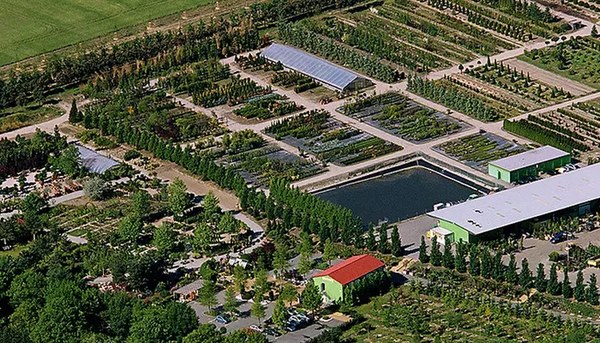
勃兰登堡属大陆性气候,夏季炎热干燥,冬天冷得早。这种气候抑制生长季拖得太长,冻害因此减少,出来的苗也更耐寒。土质是沙质壤土,站方说勃兰登堡处在有利的 7a 气候带,冬季气温到零下 30 度,夏季能到 30 度;少雨寒冬让苗木彻底适应,抗旱也抗霜。
品质上站方讲四件事:耐气候、树形、根系和修剪。树形靠逐年挑选与专业养护,移栽之后还要做整形和养形修剪,这些活由苗圃师傅、技术员和学徒全年承担。
产品目录超过 800 页,收各类木本与宿根植物、规划参考和种植说明,另有花期日历。可供货的类别包括阔叶乔木(栎、槭、椴、枫杨等)、针叶树(松、云杉、柏)、造型树(球形、锥形、柱形)、孤植与绿篱(黄杨、女贞、竹)、宿根与观赏草(薰衣草、蒲苇、蕨类)以及异域品种与珍品(玉兰、银杏、鸡爪槭)。站上还标明产品适用 6 和 7A 耐寒带。
应对气候变化的选育与合作
站方从 2009 年起就设了试验地块做抗逆测试,把长期试验结果、GALK 树木名录以及与洪堡大学柏林、柏林工业大学、费希特斯赫恩观赏与实用园艺研究所、奎德林堡州立农业和园艺研究所的合作放在一起,整理出一份推荐树种清单;在线的未来树种品类列有 80 项商品。
另一项研究用离体繁殖培育木本植物,并按生理指标早期筛选,专门用于城市街道的树木。生产上,站方用花蜜植物组合吸引天敌来控制病虫害,用覆盖作物养护土壤;工具从手工除草锄到自动驾驶拖拉机都有。研究伙伴包括德国苗圃联合会、柏林工业大学、洪堡大学柏林、王家园林学院和巴伐利亚葡萄与园林研究所。
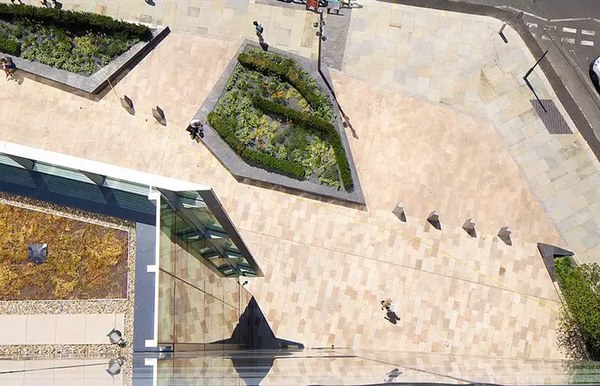
站上首页列出几处参考工程,包括格拉斯哥的 Broomielaw、伦敦的 Hammersmith Grove、马尔默的 Hyllie Arena 和圣彼得堡的 Summergarden。站点提供德语、英语、法语和俄语四个版本;除欧洲以外,货物还发往亚洲和其他海外地区。
From a Rose Nursery in Prenzlauer Berg
The business goes back to 1843, when Heinrich Gottlob Lorberg opened a rose nursery with an attached coffee house in Berlin Prenzlauer Berg. In 1874 Max Heinrich Lorberg moved the nursery to Biesenthal north of Berlin, and the production of avenue trees began there.
Around the turn of the century, under Eugen Heinrich Lorberg the output was expanded to more than twenty thousand street trees, and 170 varieties of fruit, roses and ornamental shrubs were added. Karl Heinrich Lorberg took over in 1925, and by 1945 the nursery was working about 120 hectares.
Rebuilding After the War
In 1949 the nursery was expropriated and turned into DDR public property. After returning from captivity, Karl Lorberg started again on two hectares in Berlin-Lichtenrade. When Dieter Heinrich Lorberg joined in 1962, more production land was added in Lower Saxony and the total grew to about 200 hectares.
After the Wall came down, Stefan Heinrich Lorberg searched for suitable production land around Berlin, and over six years trees, shrubs and conifers were moved to the new site in Ketzin in the Havelland district.
Scale and Four Locations Today
By 2000 the production area had grown to about 800 hectares. The site described itself at the time as one of the largest production nurseries in Europe, with customers in some 30 countries, and further branches were opened in Berlin and Baden-Württemberg. In 2021 the families Bremke and Kröber joined the group as further shareholders, and the acquisition of the Ernst Lohmann nursery brought a location in Schleswig-Holstein with it.
The four locations each have their own role: Tremmen is the headquarters and production site, in the municipality of Ketzin in the Havelland district of Brandenburg; Kleinziethen handles wholesale and retail sales, in the municipality of Schönefeld in Brandenburg; Baden-Baden does wholesale and retail work in Baden-Württemberg; and Seeth-Ekholt, in Schleswig-Holstein, deals in wholesale and production and is the northernmost of the four. Kleinziethen also runs a rent-a-tree business, letting large trees out to customers.
In September 2026 the site announced that the shareholders of the group had appointed Ralf Stolle as the new managing director. He has around twenty-five years of experience in the horticultural industry and will lead the group from its headquarters in Tremmen alongside Stefan Lorberg, while Daniel Lorberg will in future concentrate on his role as a shareholder.
Private customers can buy directly at the retail locations in Kleinziethen and Baden-Baden, while the two production sites work by prior appointment. The site notes that not every location serves private customers.
Climate, Soil and Plant Quality
Brandenburg has a continental climate, with hot dry summers and winters that arrive early. That shortens the growing season, so frost damage is reduced and the plants come out hardier. The soil is a sandy loam, and the site puts Brandenburg in the favourable climate zone 7a, with winter temperatures down to minus 30 degrees and summer temperatures up to 30. Low rainfall and cold winters leave the plants thoroughly acclimatised, tolerant of drought and of frost.
On quality the site names four things: robustness against climate, good shape, root system and pruning. Shape comes from selecting year by year and from skilled care; after transplanting, shaping and training cuts are still to be made, and those jobs are done throughout the year by nursery masters, technicians and apprentices.
The plant catalogue runs to more than 800 pages, covering woody plants and perennials together with planning aids and planting instructions, and there is also a flowering calendar. The range offered includes deciduous trees such as oak, maple, lime and sweetgum, conifers such as pine, spruce and cypress, topiary in ball, cone and column forms, specimen trees and hedging such as box, privet and bamboo, perennials and grasses such as lavender, pampas grass and ferns, and exotics and rarities such as magnolia, ginkgo and Japanese maple. The site also states that its plants suit hardiness zones 6 and 7A.
Breeding for a Changing Climate
The site has kept test plots for stress testing since 2009. Its list of recommended trees is drawn from those long-term test results, from the GALK tree list, and from work with Humboldt University Berlin, Berlin University of Technology, the Institute for Commercial and Ornamental Horticulture in Veitshöchheim and the state agricultural and horticultural institute in Quedlinburg. The online range of future trees lists 80 items.
A second line of research propagates woody plants in vitro and selects them early by physiological characteristics, aimed at trees for city streets. In production the site brings beneficial insects in with flowering mixtures to keep pests down, and uses cover crops to look after the soil; the tools run from a hand hoe to an autonomous tractor. Research partners include the German association of tree nurseries, Berlin University of Technology, Humboldt University Berlin, the Royal Horticultural Academy and the Bavarian state institute for viticulture and horticulture.
Several reference projects are listed on the home page, among them Broomielaw in Glasgow, Hammersmith Grove in London, Hyllie Arena in Malmö and the Summergarden in St Petersburg. The site is available in German, English, French and Russian, and beyond Europe the plants are also shipped to Asia and to other overseas markets.
相关文章:
 美国 唱歌树花园苗圃 (Singing Tree Gardens Nursery) – 加州红木带北岸专精植物苗圃
 美国 Brooks Tree Farm – 为圣诞树、林业用材和观赏苗圃行业提供种苗
 加拿大 Golden Bough Tree Farm – 超过50年历史的裸根树木农场
 美国 Gossler农场苗圃 Gossler Farms Nursery – 俄勒冈州稀有观赏植物家族苗圃
 美国波特兰苗圃Portland Nursery – 波特兰东南部的花园商店
 美国 山谷苗圃 Valley Nursery – 占地6英亩品类齐全的独立苗圃
 美国 花园之门苗圃 Garden Gate Nursery – 美国西北太平洋容器树批发苗圃
 美国 洛马维斯塔苗圃Loma Vista Nursery – 提供全系列容器和田间种植的植物材料,
发表回复