
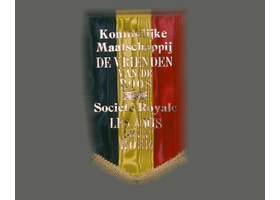
从 1926 年根特创立到 1968 年共同建立世界玫瑰联合会
比利时皇家和国家玫瑰协会(Koninklijke Nationale Maatschappij “De Vrienden van de Roos” / Société Royale Nationale “Les Amis de la Rose”,法语简称 Les Amis de la Rose,英文译名 The Royal and National Rose Society of Belgium,所在域名 rosabelgica.be,会刊 Rosa Belgica)于 1926 年由根特人乔治·范奥斯特(Georges van Oost)创办。范奥斯特是比利时知名的玫瑰鉴赏家和栽培推广者,他建立这家协会的初衷,是让比利时境内外的玫瑰爱好者、业余玩家和从业者能够彼此交流,也让玫瑰这种”花中皇后”的相关知识得到更系统的整理与传播。1968 年,协会参与发起并共同创建了世界玫瑰联合会(World Federation of Rose Societies,简称 WFRS),是这家覆盖四十个成员国、九十多个国家级玫瑰团体的国际组织的创始成员之一,自此一直以法语、荷兰语、英语、德语四语并用的方式跟各大洲同行保持密切联系。
从 Redouté 到 Lens:把比利时送上世界玫瑰史的五个名字
协会在自家欢迎词中提到的五位比利时玫瑰史人物,分别是皮埃尔-约瑟夫·雷杜德(Pierre-Joseph Redouté,1759-1840,那不勒斯出身但长期在比利时工作的宫廷花卉画家,著有玫瑰图谱 Les Roses,比利时境内的玫瑰出版传统由此奠定)、弗朗索瓦·克雷潘(François Crépin,1830-1903,比利时玫瑰分类学家,留下约 40,000 件模式标本给梅斯植物园珍藏)、路易·帕尔芒蒂耶(Louis Parmentier,1838 年前后在根特附近经营玫瑰苗圃的早期育种者)、路易·范豪特(Louis Van Houtte,19 世纪根特苗圃巨头)和路易·伦斯(Louis Lens,1924-2001,伦斯玫瑰 Lens Roses 创办人,家族至今仍是比利时最具盛名的玫瑰育种世家)。这五个名字加在一起,几乎串起了比利时从 19 世纪初到 20 世纪末在欧洲玫瑰史上的角色。协会现任负责人弗朗斯·托马斯(Frans Thomas)于 2010 年前后接任主席,会址设在东佛兰德省梅勒(Melle),按章程和惯例对外联系通过秘书处公开邮箱。
梅斯植物园 Crépin 玫瑰标本馆数字化与协会的学术参与
协会参与的最大规模合作项目,是跟梅斯植物园(Meise Botanic Garden)和世界玫瑰联合会下属的皮亚杰基金会(Piaget Foundation)共同推进的 Crépin 玫瑰标本馆数字化。Crépin 一生收藏的玫瑰压腊与绘图约 40,000 份,其中相当部分含微量汞化合物防腐剂,无法轻易取阅;三方合作的第一阶段已经完成约 12,000 张高分辨率影像扫描并存入梅斯植物园本地以及弗拉芒档案研究所(VIAA)的异地备份,最终通过 botanicalcollections.be、GBIF 和 Europeana 等开放数据平台向研究者开放。这项工作既是协会学术层面的代表性投入,也让 Crépin 这位比利时分类学家的遗产第一次能够以数字形态被全球玫瑰研究者直接调阅。协会还在 2020 年跟梅斯植物园联合承办了 WFRS 遗产玫瑰大会(Heritage Roses Conference),那次因新冠疫情从原定 6 月推迟到了下半年举行。
会刊 Rosa Belgica、Vrijbroek 玫瑰园与协会活动体系
协会自 1964 年前后开始出版会刊 Rosa Belgica(法语、荷兰语双刊并行),每年四期,截至 2014 年已经出版到 50 周年,是比利时境内历史最长的玫瑰专门期刊之一。会刊常设栏目包括新品种介绍、玫瑰栽培技术、玫瑰文化随笔和国际会议报道。协会实际运营或深度参与的代表性玫瑰园是位于梅赫伦(Mechelen)的 Vrijbroek Park Rose Garden,园中按现代玫瑰、老玫瑰、野生玫瑰分类分区展示,接待协会会员和普通游客。除此之外,协会的年度活动还包括国际玫瑰新品种竞赛(与比利时境内 Kortrijk / Le Roeulx 等玫瑰赛事的合作组织)、欧洲国家玫瑰团体互访、年度会员大会和玫瑰摄影工作坊,会员可获得会刊订阅、园圃开放日通行证及种子交换名录等福利。
一家覆盖双语区的小型全国协会在 WFRS 中的位置
比利时皇家和国家玫瑰协会是一家典型的国家级小型同业协会:会员规模不大,运作依靠会费和少量赞助,会址设在一个住宅区,工作语言覆盖法语(瓦隆-布鲁塞尔)、荷兰语(弗拉芒)、英语和德语四种,依托梅斯植物园这样的国家级科研机构来承担学术合作,自己则负责会员联络、出版、活动组织和国际窗口。这种把学术研究与会员服务分开的做法让协会体量虽小,但每一份出版物、每一场活动都直接对接到比利时最权威的玫瑰科研与展示资源。同时,作为 WFRS 1968 年的创始成员,协会也是比利时境内唯一一家被列入 WFRS 名录的全国玫瑰团体,跟德国月季协会(Deutsche Rosengesellschaft,1883 年创立)、荷兰玫瑰协会(Nederlandse Rozenvereniging,1976 年加入 WFRS)等邻国团体保持长期协作。
From the 1926 Founding in Ghent to Co-Founding the WFRS in 1968
The Royal and National Rose Society of Belgium (Koninklijke Nationale Maatschappij “De Vrienden van de Roos” / Société Royale Nationale “Les Amis de la Rose”, newsletter “Rosa Belgica”, official site rosabelgica.be) was founded in 1926 in Ghent by Georges van Oost, a Belgian rose connoisseur and promoter. He set up the association so that amateur and professional rose growers across Belgium and abroad could share knowledge and so that the cultivation of the “queen of flowers” could be documented and propagated more systematically. In 1968 the society was one of the founding members of the World Federation of Rose Societies (WFRS), the international umbrella that today groups some forty national rose societies on every continent, and has since kept close contact with sister societies in Europe, North America, Asia and Oceania through a working routine in Dutch, French, English and German.
From Redouté to Lens: Five Belgian Names on the World Rose Map
The five historical figures the society itself names in its welcome message are Pierre-Joseph Redouté (1759-1840, the court flower painter whose three-volume “Les Roses” remains a touchstone of rose illustration), François Crépin (1830-1903, Belgian rose taxonomist whose personal herbarium of roughly 40,000 sheets now rests at Meise Botanic Garden), Louis Parmentier (an early rose nurseryman active around Ghent in 1838), Louis Van Houtte (the nineteenth-century Ghent nursery dynasty) and Louis Lens (1924-2001, founder of Lens Roses, the Belgian breeding house still renowned today). Together they thread the Belgian contribution to the European rose story across two centuries. The current president, Frans Thomas, has led the society since around 2010. The secretariat is based in Melle, East Flanders, and reaches members and the public through its newsletter and through the dedicated secretariat e-mail address.
The Crépin Herbarium Digitisation and the Society’s Scholarly Role
The society’s most sustained scholarly partnership is the digitisation of the Crépin rose herbarium at Meise Botanic Garden, carried out together with the WFRS-administered Piaget Foundation. Crépin’s personal collection of dried and pressed roses runs to about 40,000 sheets, but a number of them were historically treated with mercury-based preservatives and could not easily be handled in person. The first phase of the project has imaged roughly 12,000 sheets at high resolution; the master files are held at Meise Botanic Garden with off-site copies at the Flemish Institute for Archiving (VIAA), and the long-term goal is to expose them through open-access portals such as botanicalcollections.be, GBIF and Europeana. The society also co-hosted the WFRS Heritage Roses Conference in 2020 with Meise Botanic Garden; the Brussels-based meeting was originally planned for June and was pushed to the second half of the year because of the pandemic.
The Rosa Belgica Newsletter, Vrijbroek Park Rose Garden and the Society’s Events
The society has published a newsletter called Rosa Belgica (parallel French and Dutch editions) since around 1964. By 2014 the newsletter had reached its fiftieth year, making it one of the longest-running specialised rose journals in Belgium. Its regular columns cover new cultivar introductions, cultivation techniques, rose-culture writing and reports on international meetings. The rose garden the society runs in practice is the Vrijbroek Park Rose Garden in Mechelen, which displays modern, heritage and wild roses side by side and is open to both members and the general public. Beyond this, the society organises or co-organises annual activities that include the Belgian rose competitions at Kortrijk and Le Roeulx, mutual visits with sister societies abroad, the annual members’ meeting and rose photography workshops; membership benefits include the newsletter subscription, open-day access to partner gardens and the seed-exchange list.
A Small Bilingual National Society Inside the WFRS
The Royal and National Rose Society of Belgium is a small national society in the classic sense: a modest membership, financed mainly through dues and limited sponsorship, a secretariat in a residential district, working languages in French (Wallonia-Brussels), Dutch (Flanders), English and German, and a deliberate division of labour in which scientific collaboration is delegated to Meise Botanic Garden while the society itself focuses on member liaison, publications, event organisation and the international window. This split keeps the society compact while every publication and event plugs directly into Belgium’s most authoritative rose research and display resources. As a 1968 founding member of the WFRS, it is also the only Belgian national rose society listed in the WFRS directory, and works closely with neighbours such as the Deutsche Rosengesellschaft (Germany, 1883) and the Nederlandse Rozenvereniging (Netherlands, WFRS member since 1976).
相关文章:
 法国 月季(玫瑰)协会 Société Française des Roses – 法国最具历史的专业月季组织之一
 比利时 Lens Roses 玫瑰苗圃 – 比利时百年玫瑰育种传承品牌
 英国玫瑰协会 Rose Society UK – 英国玫瑰协会Rose Society UK成立于2017年,目标是:促进和激发人们对种植玫瑰的兴趣,
 加拿大 温哥华月季(玫瑰)协会 – 行业自律与服务组织
 美国 传统玫瑰小组 – 专业园艺服务机构
 加拿大 玫瑰协会 – 1913年成立的历史最悠久园艺组织
 美国Marin月季(玫瑰)协会 – 长期活跃于旧金山湾区北部的月季爱好者社区
 德国 月季(玫瑰)协会 Deutsche Rosengesellschaft – 成立于1883年
发表回复